The Rome issue
Seven Hills, One Scoop: Finding Rome's Gelato Without Falling for the Tourist Trap
The neon mountains in the window are the tell — here's how to read a Roman gelato counter and taste the real thing, one honest scoop at a time.

By Tomás AlmeidaRome beyond the checklist
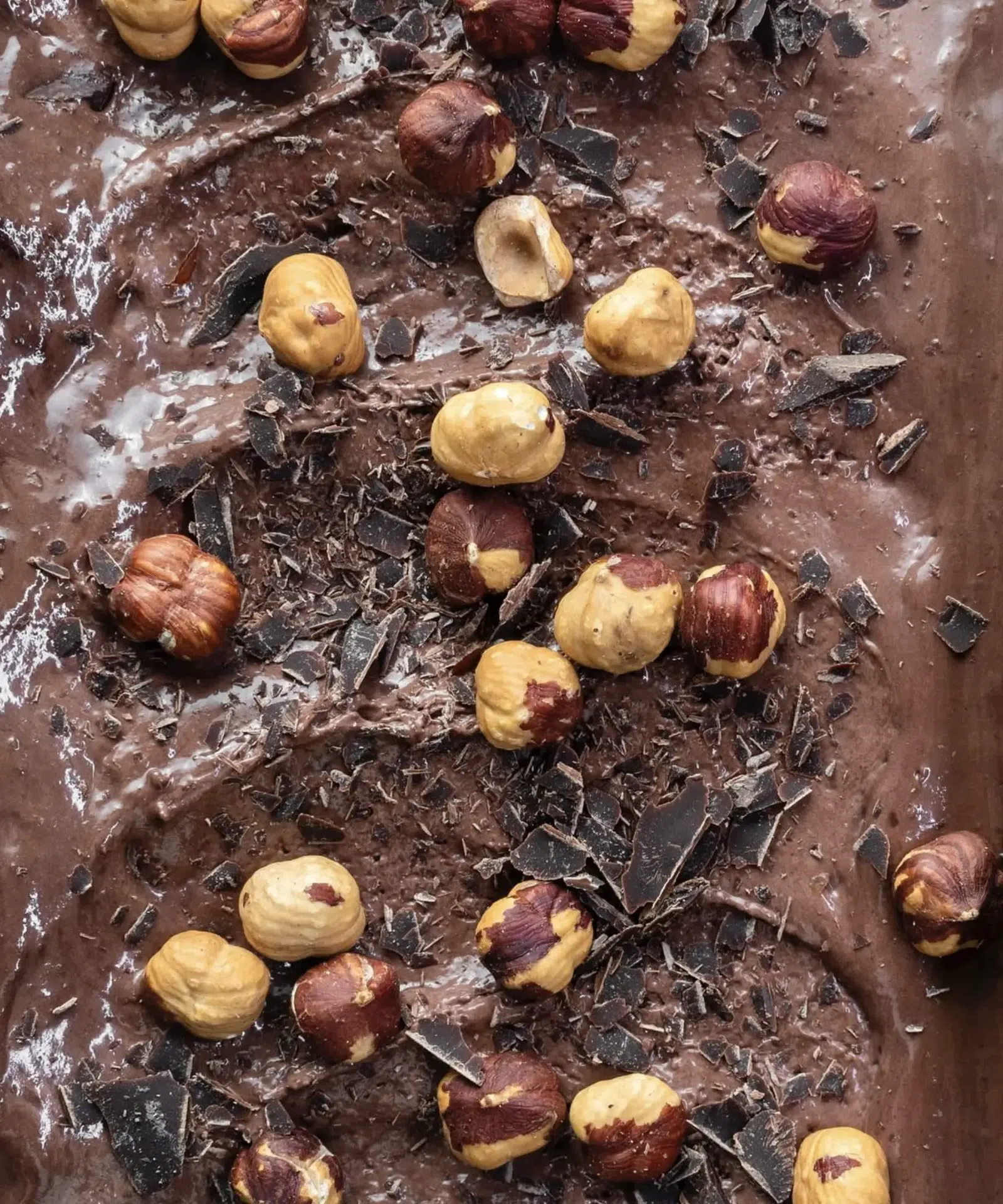
The window is the first lie. Walk past almost any bar near Piazza Navona in the July heat and you will see it: gelato whipped into meringue peaks the height of a child's fist, banana the yellow of a highlighter, mint a green that glows. It looks generous. It is, in fact, the surest sign that what you are about to buy has been inflated with air, stabilised with additives, and coloured for the camera rather than the tongue. Rome keeps its best gelato behind flatter, quieter counters — and once you learn to read them, you will never fall for the mountain again.
This is a walking guide to the second kind, the honest kind, built from places I go back to every year rather than a list padded with names I half-remember. Take it slowly. Gelato in Rome is not a purchase so much as a pause — a reason to sit on a step, watch the light move down a facade, and let the afternoon soften. For where to base yourself between scoops, the wider Rome guide has the neighbourhood lay of the land; this piece is only about the cold stuff, and about not being fooled.
Reading the Window: How to Spot the Real Thing
Before you taste anything, look. The single most reliable tell is the tin. Real gelato is stored in flat, covered metal pans — pozzetti in the deepest cases, or shallow trays kept below a low sneeze-guard — because it is soft, unstable, and best protected from warm air and daylight. It cannot hold a peak. If a flavour is piled into a swirling turret above the rim of its tub, it has been pumped full of air and hardened with emulsifiers to stand up like that. Beautiful architecture is a warning, not a promise.
The second tell is colour, and it is unforgiving. Fruit and nuts are muted, not fluorescent. A true pistachio is olive-brown, the drab grey-green of the actual nut ground with its skins — never the emerald of a golf course. Banana is pale beige, faintly grey, because a real banana browns; if it is canary-yellow, you are looking at dye. Mint should be almost white. Stracciatella is milk-white shot through with dark shards, not mint-green. When every tub in the case looks like a paint chart, keep walking.
The rest is common sense. Good gelaterie tend to list a shorter, seasonal roster and are happy to tell you what is in it; the fruit changes with what is ripe, so a flat display of forty year-round flavours including tropical fruits in midwinter is a factory, not a laboratory. Learn these three tells — flat tins, muted colour, honest labelling — and the city rearranges itself. Half the windows fall away, and the good counters step forward.
Plan your Rome trip
Live prices from our booking partners.
Free cancellation on many rooms. We may earn a commission when you book.
Gelato Is Not Ice Cream — and the Flavours That Prove It
It helps to know what you are actually eating. Gelato is not simply the Italian word for ice cream; it is a different formula. It carries less butterfat, so the flavour hits your palate more directly instead of being muffled by cream. It is churned slower, folding in far less air, which is why a good scoop feels dense and elastic rather than fluffy. And crucially it is served a few degrees warmer than ice cream — soft enough to smear, not scrape — so the aromatics bloom the moment it touches your tongue. That warmer serve is also why it melts fast in a Roman summer: eat with purpose.
Once you understand the density, the classic Roman flavours make sense. Order crema and you get the city's benchmark: a plain egg-yolk custard, faintly lemon-and-vanilla, that exposes any shortcut instantly. Order zabaione and you taste the same custard laced with Marsala wine, an old-fashioned, faintly boozy warmth that the historic houses do best. And stracciatella — fresh milk base with fine shavings of dark chocolate cracked through it — is the one everybody thinks they know and few make properly; done right it is quiet, milky, and barely sweet.
One more thing, because visitors get shy about it: on a small cone or cup, asking for two flavours is completely normal. It is not greedy and it is not a faux pas — it is simply how Romans taste. Pair a fruit sorbet against a cream, a crema against a stracciatella, and you learn more in one cone than in three timid single scoops. The person behind the counter expects it.
The Benchmarks: Where the Craft Peaks

Start with the places that set the standard, because once your palate is calibrated the impostors become obvious. Gelateria dei Gracchi (Prati, a short walk from the Vatican, with several other locations across the city) is the textbook. Alberto Manassei's shop is the one the late Anthony Bourdain called the best of the best, and it is the clearest lesson in flat tins and honest colour you will find — nothing piled, nothing glowing, everything tasting of exactly what it says. At €2.80–4.50 a cone it handles groups easily precisely because you can spread a crowd across its branches instead of jamming one counter; walk-in, no policy, no fuss.

For the top of the craft, cross to Trastevere and find Otaleg (its name is 'gelato' spelled backwards). This is Marco Radicioni's Gambero Rosso Tre Coni laboratory, with thirty fruit sorbets that rotate on what the market gives him and classics tuned to the decimal. Be warned: it is a tiny footprint. Groups are welcome but there are no reservations and you will queue and stand on the pavement, which in the Trastevere lanes is part of the ritual rather than a hardship — go outside the post-dinner crush and it is calmer.
The third benchmark is the source of the whole movement. Il Gelato di Claudio Torcè (with outlets including the Aventino, EUR, and near Campo de' Fiori) belongs to the man widely called the godfather of Rome's natural-gelato revival — Otaleg's Radicioni trained in his kitchen. Torcè is where you go for the savoury-leaning experiments you will never see in a tourist window: herb, vegetable, and pungent-cheese notes alongside the classics. Counter-service, groups fine, prices in the same €2.80–4.50 band. Taste here and you understand what everyone else is measuring themselves against.

In and Around the Centro Storico
The historic centre is where the trap is densest, which makes the honest counters tucked into it all the more worth the detour. Gelateria del Teatro (on the quiet lanes near Via dei Coronari, minutes from Piazza Navona) is a small shop of seasonal, garden-driven flavours from a former pastry chef — rosemary-honey-lemon, ricotta and fig when the figs are in. It gets busy, but an interior staircase gives you standing room, and it is a picture of centre-of-Rome gelato made properly rather than for the display. Groups are welcome; go early afternoon to miss the worst of the press.

A few streets away, near the Pantheon, Günther Gelato Italiano brings a South Tyrolean, alpine-dairy sensibility to the Roman recipe — precise, milk-driven, and consciously the opposite of the neon tubs a block over. It is central but less mobbed than the Navona frontage, counter-service, and comfortable with a group. For the sheer restraint of good milk gelato this deep in the tourist grid, it is a small revelation.

For a fun finish rather than a masterclass, Frigidarium (just off Piazza Navona) is the exception that proves the rule: central, hugely popular, and yet still made honestly. Its party trick is the signature dip — the whole cone plunged into a chocolate shell that sets in seconds. It is a crowd-pleaser without the fake-mountain dishonesty of its neighbours. The catch is space: it is very small, the alley is narrow, and at peak it is standing-room-only with a line down the lane. Come off-peak and let the shell be dessert's full stop.

Worth folding into any centre walk is Fatamorgana (with branches in Monti, Trastevere, on the Corso, and up towards Salaria), the proof that 'artisanal' means restraint in colour, not in imagination. Everything is all-natural and gluten-free, and the flavours are wildly inventive — a tobacco-and-chocolate scoop called 'Kentucky', pineapple-ginger, herb-and-nut combinations — yet the tubs sit flat and muted, exactly as they should. Its multiple branches make it the smart choice for a group at peak: split the crowd across two locations rather than blocking one small counter.

Trastevere, Slowly
Trastevere rewards an unhurried gelato crawl more than anywhere, because the distances are short and the standing-around is half the pleasure. You already have Otaleg here. Add Fior di Luna, a tiny certified-organic, fair-trade shop that has been making additive-free gelato since 1993. Its stracciatella is the one to order as a control sample — flat, quiet, milk-white and softly chocolate-flecked, the benchmark against which every fluorescent impostor across the river reveals itself. Space is minimal, so a group will spill onto the lane; that is simply how a good small gelateria works, and the cobbles are comfortable enough to stand on with a cone in hand.

Work the two together with a Fatamorgana stop between them and you have a self-contained afternoon: three honest counters, a river view, and enough contrast — a Tre Coni sorbet, an organic stracciatella, a tobacco-chocolate curiosity — to teach your palate the whole spectrum in an hour.
Milk-Forward, and Worth the Tram
Two of Rome's most quietly brilliant makers sit outside the postcard core, and reaching them is part of why they stay so good. Come il Latte (near Termini, on the Castro Pretorio side) builds its base from 60–70% fresh milk, which gives a pillowy, almost whipped creaminess you feel before you taste it. The pour-your-own warm-chocolate lining for your cone is a genuine flourish rather than a gimmick; counter-service, and it takes a group without strain.

Further out, up by the MAXXI in the Flaminio district, Neve di Latte has been obsessing over sourcing since 2011 — organic milk trucked in from Bavaria, minimal sugar, and a palette so muted it looks almost colourless in the case. That pale, understated look is the whole 'real gelato is quiet' lesson made visible. It is calmer than the centre, which paradoxically makes it easier with a crowd, and the short tram ride filters out the impulse tourist. If you taste only one milk-driven gelato in Rome, make it this or Come il Latte.

The Grand Historic Halls — and the Best Bet for Big Groups
Sometimes you are eight people, or twelve, and craft laboratories with pavement queues are not the answer. Rome's old-guard houses were built for volume and remain genuinely good. Giolitti (near the Pantheon and the parliament) is touristy by location but authentically old-school: buy your voucher at the till first, then hand it over at the counter, and order the zabaione and crema capped with real whipped cream to taste the classic Roman flavours done straight. At €3.00–5.00 it is the best central option for a large party.

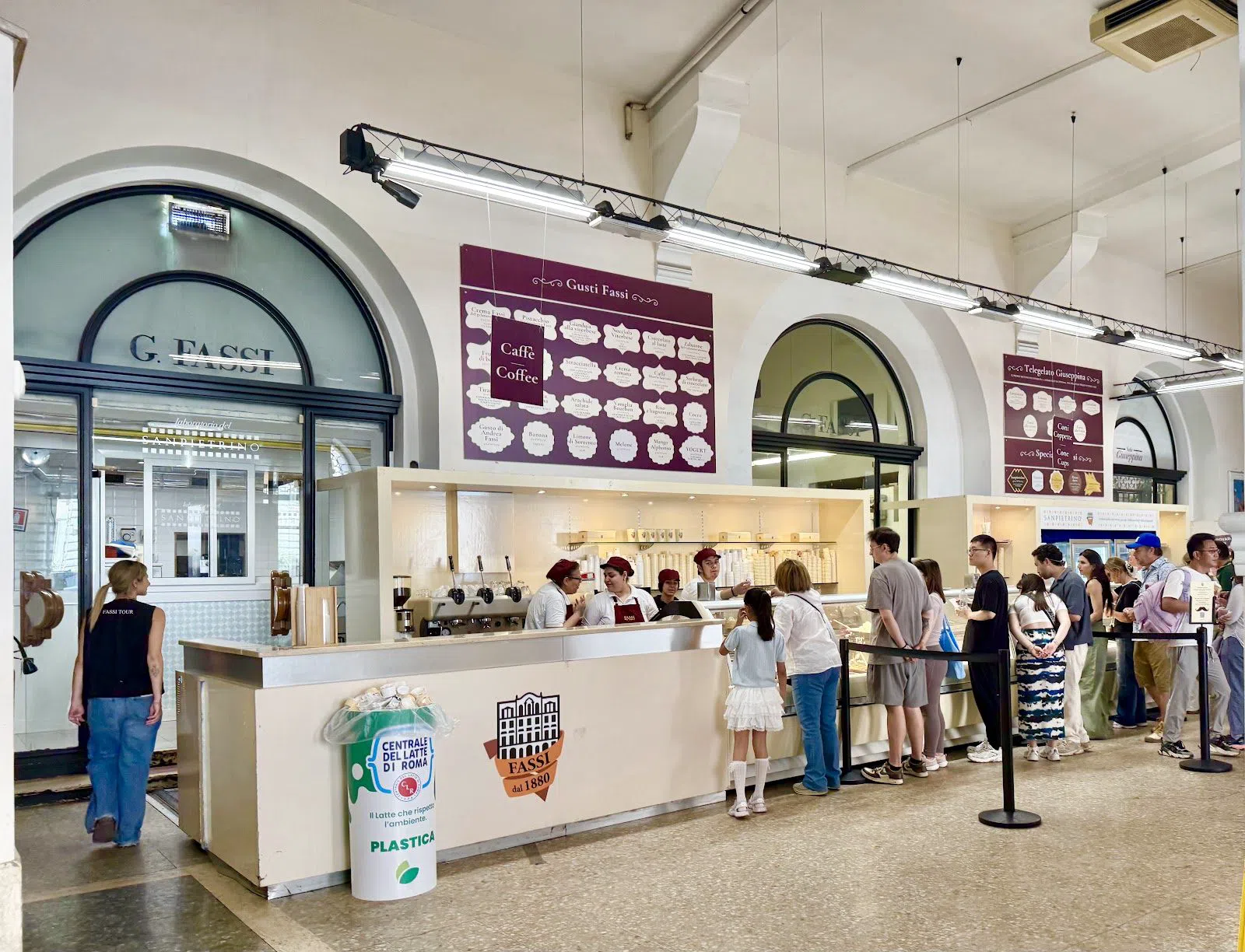
And for the single most group-friendly gelato stop in the city, go to Gelateria Fassi, trading as the Palazzo del Freddo (Esquilino, walkable from Termini). Founded in 1880 and Rome's oldest gelateria, it is a vast, marble sit-down hall — a rarity in a city of standing counters — where a dozen people can actually sit together. The zabaione and the old sanpietrino (a chocolate-and-hazelnut brick named after Rome's cobblestones) are living history. No door policy, prices from €2.50, and room to breathe.
Practical Notes: Timing, Cash, and Budget
When to go. Gelato is an afternoon and evening ritual. The centre is quietest around 15:00–17:00; after dinner, from roughly 21:00, the Trastevere and Navona counters get their heaviest crush. In the height of summer, remember the warmer serve means fast melting — order, then find your step in the shade before it runs.
Paying. Reckon on €2.50–5.00 for a cone or cup almost everywhere on this list; a small with two flavours is the sweet spot. Cards are widely accepted, but carry a little cash for the smallest shops and for Giolitti's voucher-at-the-till system, where you pay first and collect after. Prices quoted here are in euros, the local currency.
Getting around. Most of these are walkable in clusters — the centro storico shops, and the Trastevere pair-plus-one, are each a single stroll. Come il Latte sits near Termini; Neve di Latte is a short tram or Metro Line A hop to Flaminio; Fassi is an easy walk from Termini. Rome's centre is hard on feet over cobbles, so build a crawl around two or three stops rather than sprinting the whole list.
Where to stay. Basing yourself in the centro storico, Monti, or Trastevere puts most of this within a twenty-minute walk; compare neighbourhoods and prices with a Rome hotel search before you book. Pick your base for the walks, not just the sights — and let the gelato map the rest.
Before you go
How can I tell real gelato from the tourist-trap kind?
Look at the tins and the colour. Real gelato sits in flat, covered metal pans and cannot hold a peak, so any flavour piled into a tall swirling mountain has been pumped with air and stabilisers. Colours are muted, not neon: real pistachio is olive-brown, banana is pale beige, mint is nearly white. If every tub glows, keep walking.
What is the difference between gelato and ice cream?
Gelato has less butterfat, so flavours hit your palate more directly; it is churned slowly with far less air, making it denser and more elastic; and it is served a few degrees warmer, so it is soft and aromatic rather than hard. The warmer serve is also why it melts quickly in a Roman summer — eat it promptly.
Is it OK to ask for two flavours on a small cone?
Yes — it is completely normal and expected in Rome, not greedy or awkward. On a small cone or cup, Romans routinely pair two flavours, such as a fruit sorbet against a cream. It is the fastest way to taste and compare, and the counter staff won't blink.
Which classic Roman gelato flavours should I try?
Order crema (a plain egg-yolk custard that exposes any shortcut), zabaione (the same custard laced with Marsala wine, best at the historic houses), and stracciatella (fresh milk shot through with fine dark-chocolate shards). Done properly, stracciatella is milk-white and barely sweet — never mint-green.
Where should I take a large group for gelato in Rome?
Gelateria Fassi (Palazzo del Freddo) near Termini is the best bet — a vast historic sit-down hall where a dozen people can actually sit together. Giolitti near the Pantheon is the top central option with voucher-at-the-till service, and multi-branch makers like Gelateria dei Gracchi and Fatamorgana let you split a crowd across locations.


