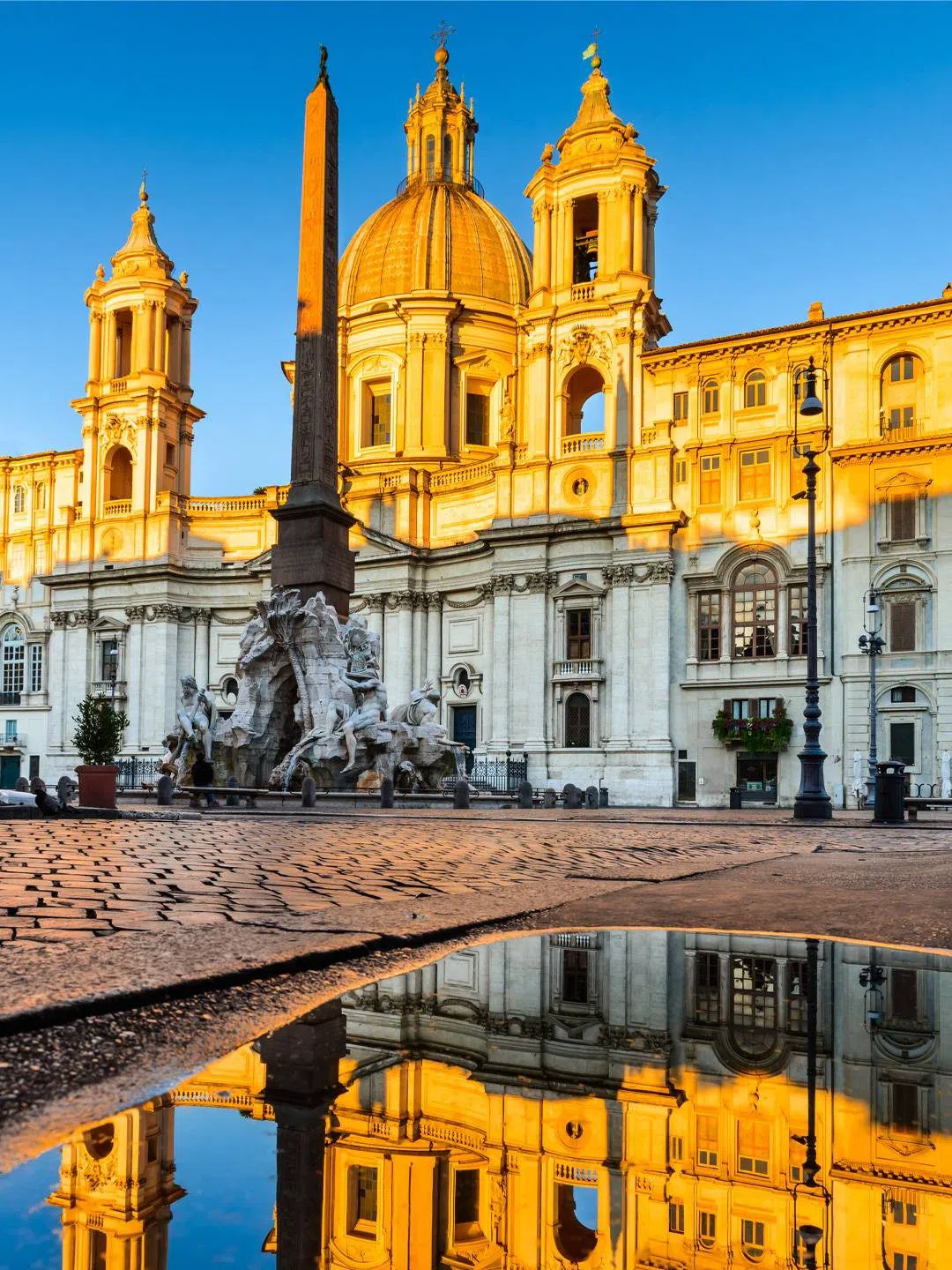
At seven in the morning Piazza Navona belongs to the water. The four river gods are still in shadow, someone is hosing the pavement in front of the cafés, and the long travertine oblong runs clear from one end to the other with nothing in it but pigeons and a delivery trolley. By eleven the same space holds portrait painters, two assembled walking groups, a bubble machine and several hundred raised phones. Almost everything worth knowing about Rome's open-air living room is a question of timing rather than tickets.
What you are walking into
Piazza Navona (Parione, in the centro storico) is not really a square. It is a running track. Domitian's stadium went up here in the AD 80s, the seating banks were quarried and built over through the Middle Ages, and the palazzo fronts you see now sit on those old foundations. That is where the shape comes from: flat, long, rounded at the north end where the curve of the stadium survives in the cellars, with no corner to cut across. The athletic contests, the agones, also gave the place its name, worn down through in agone to navone to Navona.
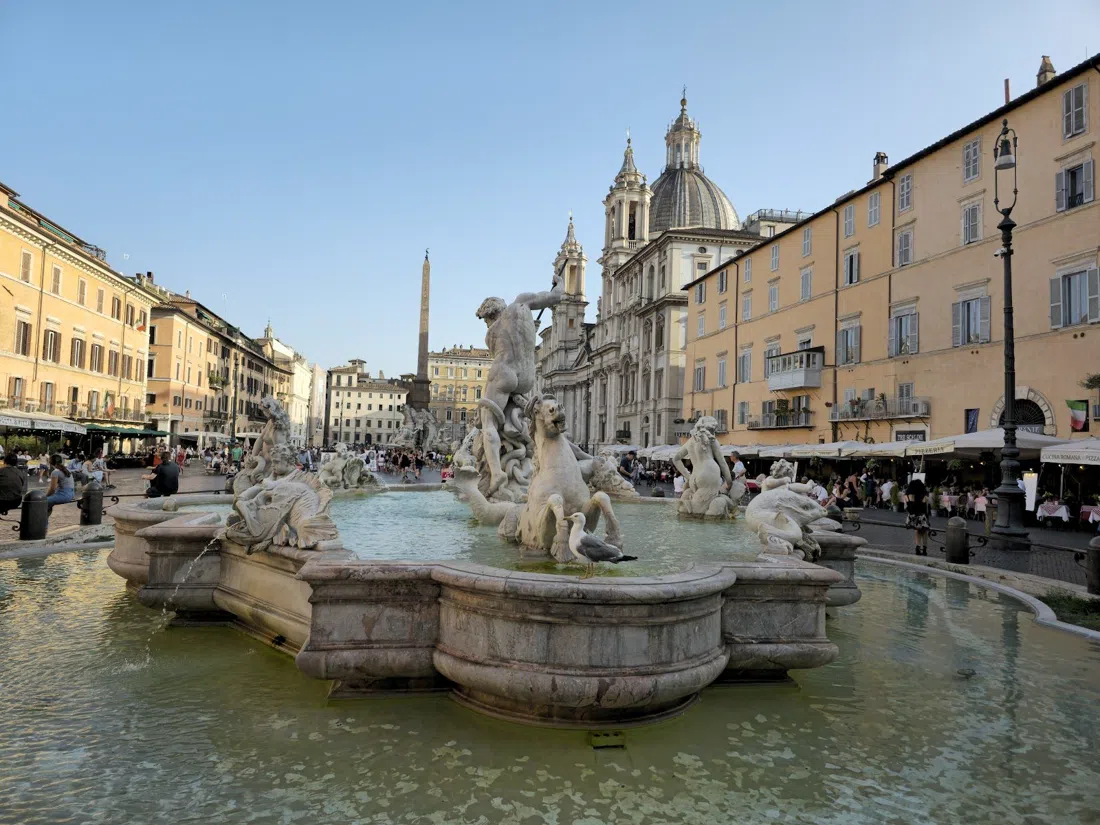
There is no door, no ticket and no closing time. You walk in, and what you get is three fountains strung along the central axis, a concave church front on the west side, café awnings down both long flanks, and easels wherever the painters have claimed a metre of shade. For two centuries the piazza was deliberately flooded in August for water games, and the best record of that hangs in the museum at the south end. Guided walking groups normally assemble at the central fountain, which is useful to know whether you are joining one or trying to stand somewhere else.
The fountain and the new fines
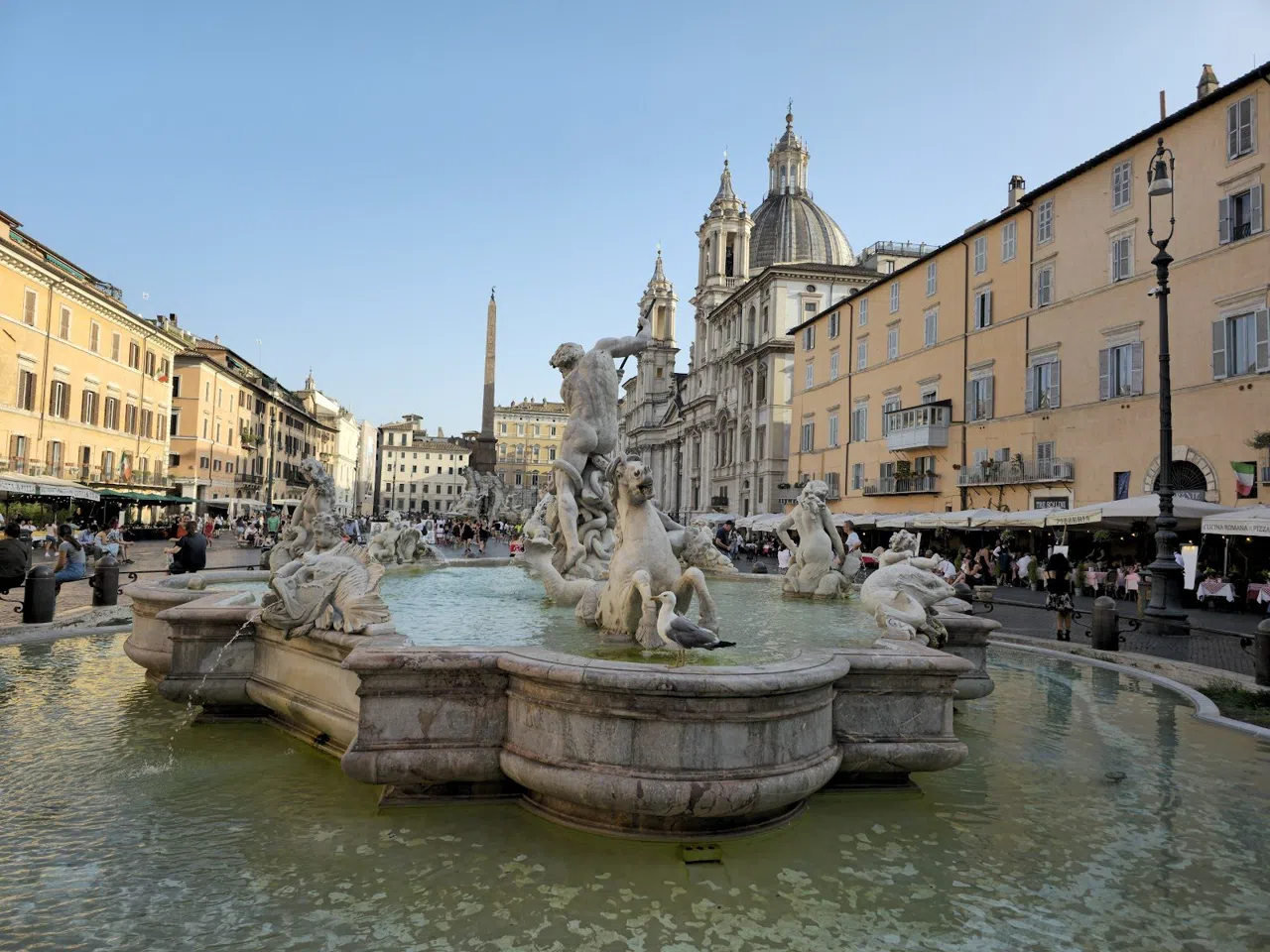
Fontana dei Quattro Fiumi (dead centre of the square) is the thing most people actually came to see. Bernini finished it in 1651, and the four seated giants stand for the Nile, the Ganges, the Danube and the Río de la Plata (the four continents then known), arranged around the base of an obelisk so that the whole mass appears to be floating. It stands free in the open, so numbers are never a problem.
Two things have changed. The first is good: a full restoration ran to April 2025, the scaffolding is gone, and 2026 is the first properly clean-stone year in two decades. Photograph it along the long axis in the morning and the carving reads the way it was cut.
The second is a trap for anyone working from older advice. Under the tightened centro storico rules, sitting on or eating on the fountain ledges now draws fines of €160 to €400, and officials in high-vis vests patrol for exactly that. Any contact with the water, even dipping a foot in on a hot afternoon, runs to roughly €200 to €500. Treat the fountains as untouchable and plan a paid seat if your group needs to sit, because there is nowhere free and comfortable to do it.
How long the square takes
A bare circuit of the piazza is fifteen to twenty minutes, and that is enough to see all three fountains properly and read the church front. Add the one interior that opens off the square and you are at forty-five minutes. Add the museum on the square and you have filled a half day without walking more than eighty metres. Use the quarter around it (two Caravaggio chapels, a second museum, a cloister, a wine bar) and the square becomes a full, slow day that never needs a taxi.
The one interior that opens off the square
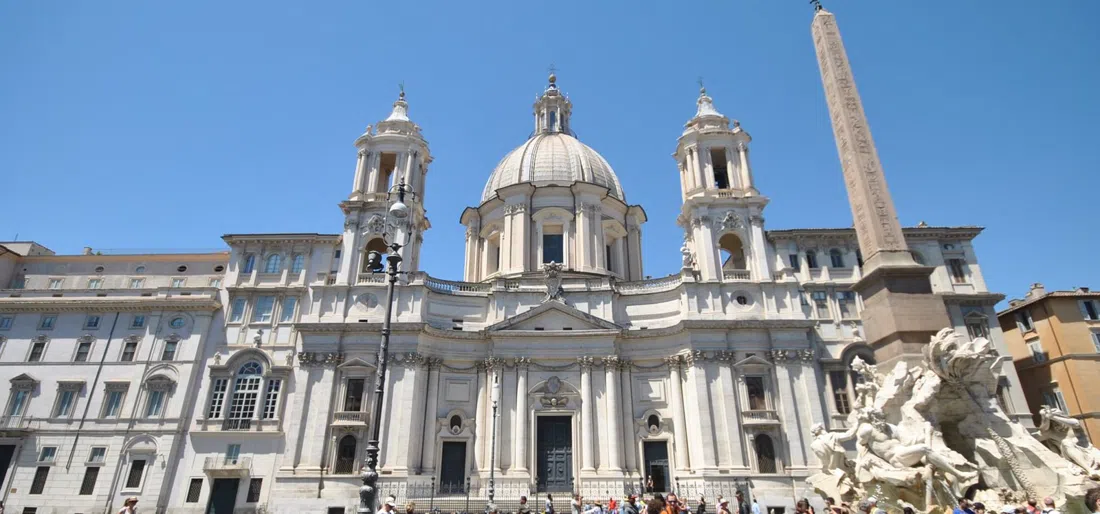
Sant'Agnese in Agone (west side of the square) is the free counterweight to Bernini outside, and the only church that opens directly onto the piazza. Groups are welcome outside Mass times. Two closures catch people out constantly: it shuts on Mondays, and it closes daily from 13:00 to 15:00, which is precisely when visitors drift off the square looking for something indoors. A separate crypt visit, booked ahead and run in small groups, costs about €5, worth arranging if you are already interested in what is under the pavement.
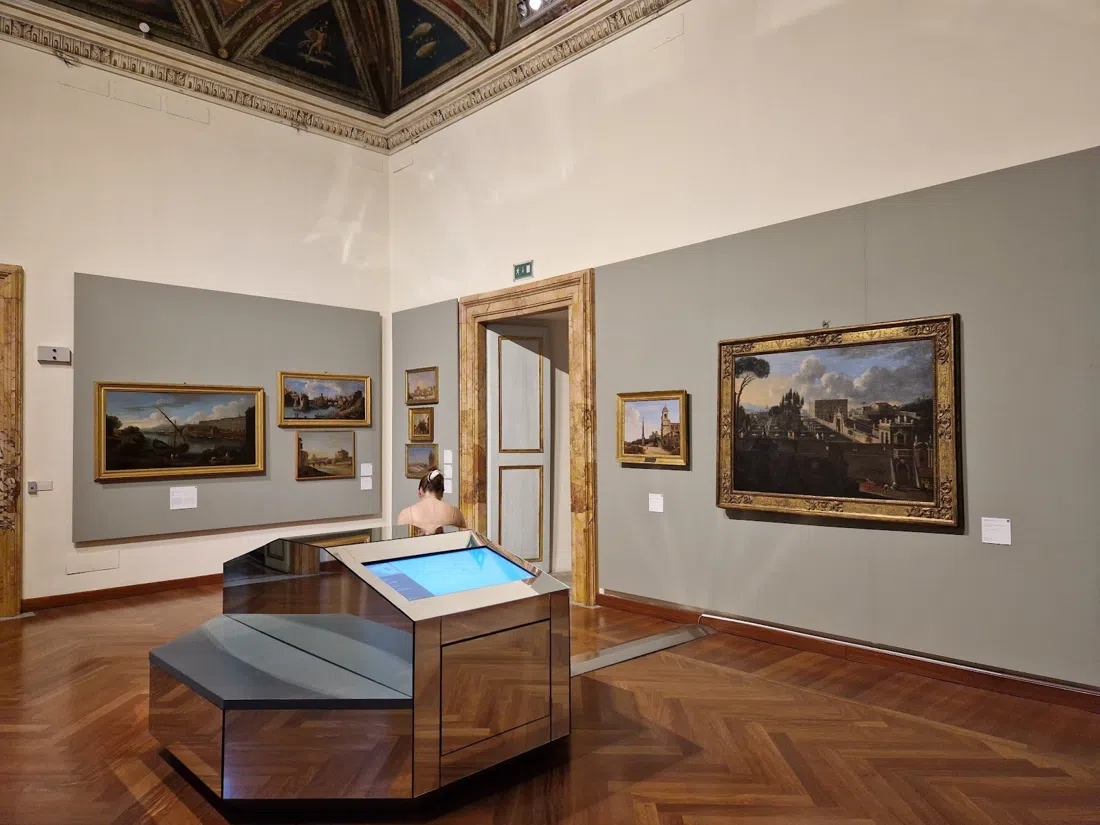
Museo di Roma – Palazzo Braschi (south end of the square) is the wet-weather move and the honest history lesson, because its paintings and prints show this space flooded for the summer water games and crowded with market stalls. Entry is €13 full, €7.50 reduced, with an audio guide at €4; the current Keith Haring exhibition is €17, or €25 on a combined ticket. Parties of 5 to 25 must reserve in advance by phone on 060608, with a minimum of five tickets, and school rates exist. Closed Mondays, like almost everything else indoors here.
Two Caravaggio chapels within five minutes
San Luigi dei Francesi (Sant'Eustachio, three minutes east) is the best free thing in walking distance of the piazza, because the Matthew cycle is still in the chapel it was painted for. Entry is free and groups are permitted, but the chapel is cramped and fills within seconds of a tour arriving, so come early or come patient; it is no place to be large. Bring €1 to €3 in coins for the lighting box, or you are looking at dark canvases. Shoulders and knees covered, silence during Mass. It closes Wednesday afternoons and shuts 12:30 to 15:00, so pair it with lunch rather than hoping to drop in.
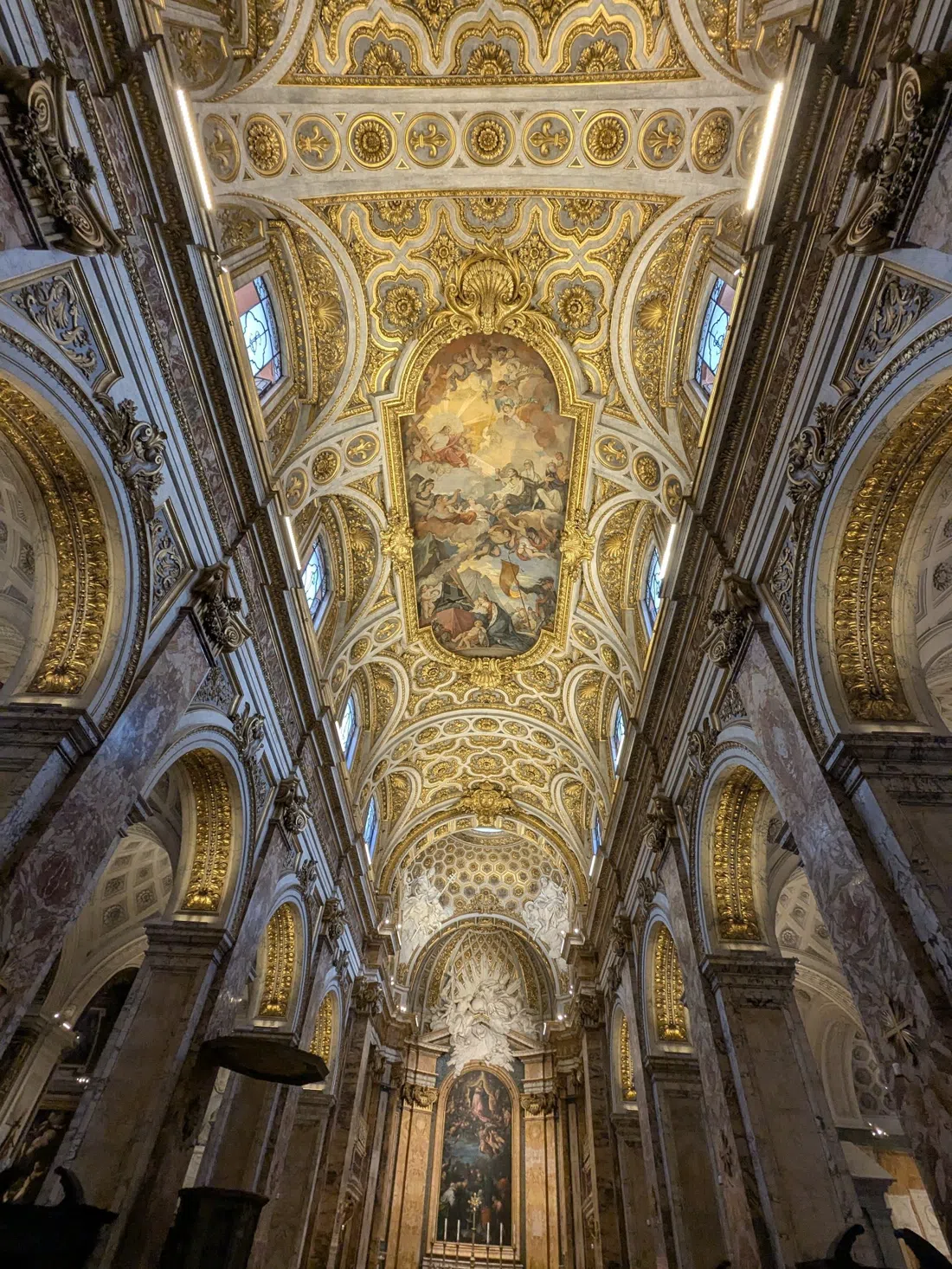
Basilica di Sant'Agostino in Campo Marzio (a few minutes north-east, off the main tourist line) is the quieter answer. Its Caravaggio, the pilgrims kneeling at a doorway with the dirty soles of their feet toward you, usually has nobody in front of it when the rail at San Luigi has a scrum. The chapel holds only a handful of people at once, so couples and pairs do far better here than coach parties. Free, modest dress expected, roughly €2 in coins to light the painting. Hours shift with parish life, so verify locally on the day.
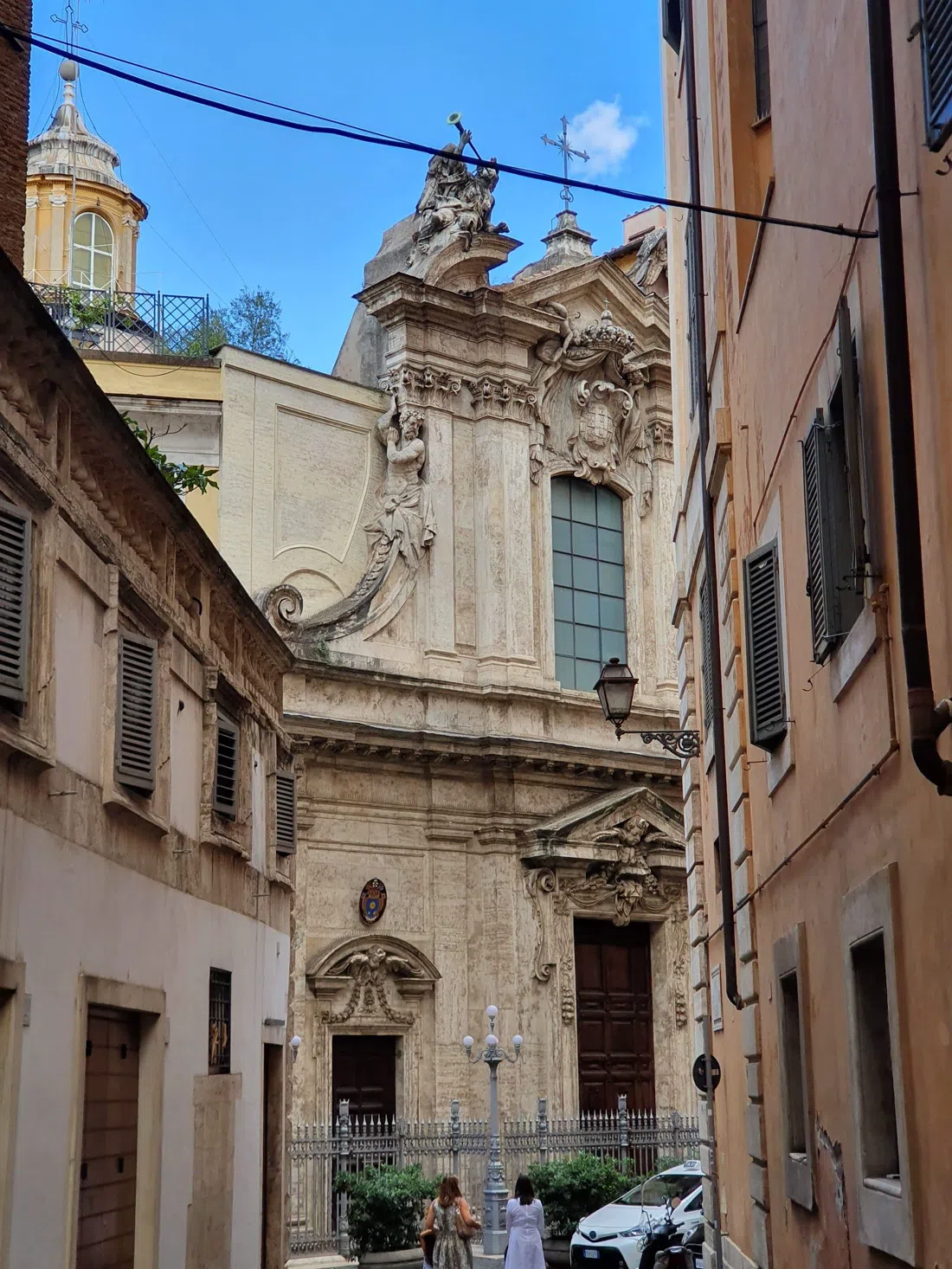
Where to go when the square is shoulder to shoulder
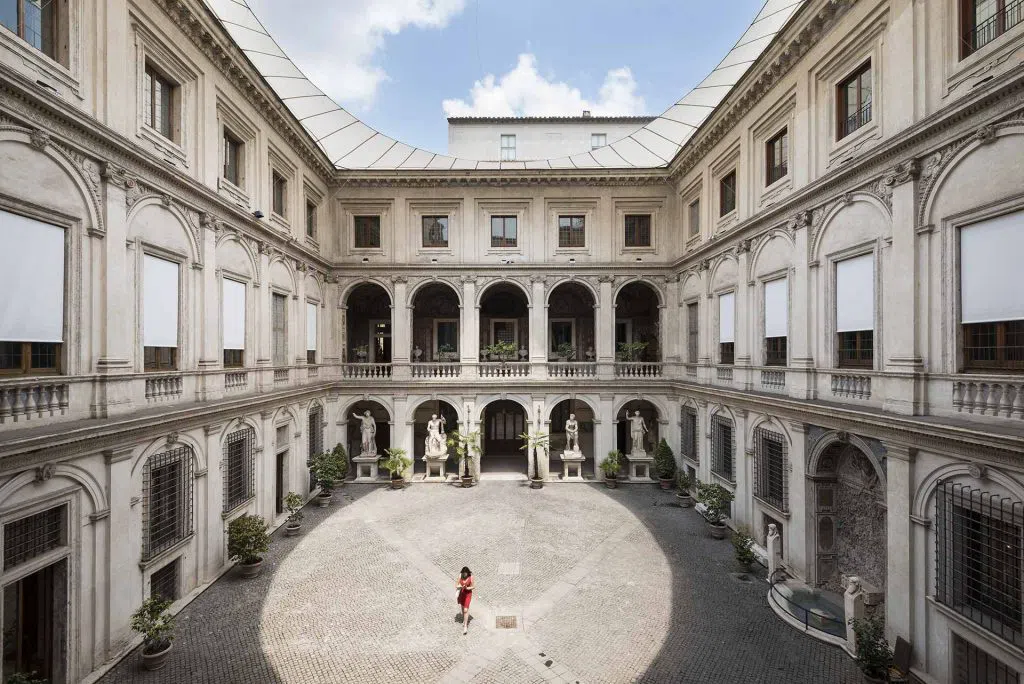
Museo Nazionale Romano – Palazzo Altemps (Ponte, two hundred metres north) is consistently the quietest serious museum in the area, and the single best escape when the piazza is impassable. Ancient sculpture is arranged room by room around a Renaissance courtyard, at a pace that lets you look at one thing at a time. The €15 integrated ticket is valid seven days across four National Roman Museum sites, which makes it strong value on a longer stay; it is €2 for EU citizens aged 18 to 25 and free under 18. Tickets are time-flexible, so a group can split across entry slots instead of queuing as a block. Closed Mondays, last admission 18:00.
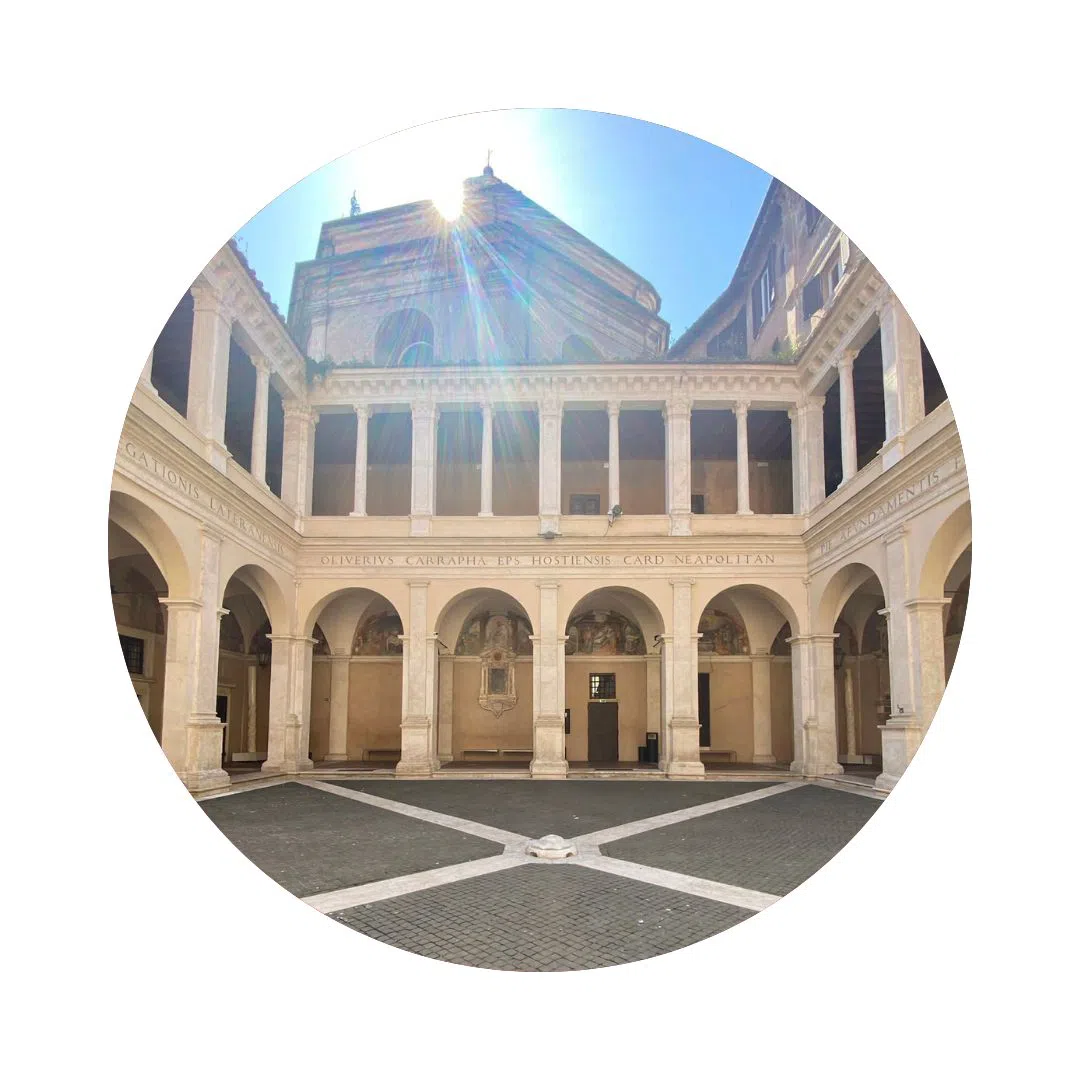
Chiostro del Bramante (Ponte, a minute west of the square) is the best-value surprise in the quarter. Around €14 including the audio guide gets you the exhibition (the current show opens on 17 October 2026 on a food-in-art theme), and the caffetteria-bistrot can be used without an exhibition ticket at all. Do that: the café window puts you closer to the Raphael sibyls than you can get from inside the church next door. Groups need to book ahead. Later closing on Fridays and Saturdays.
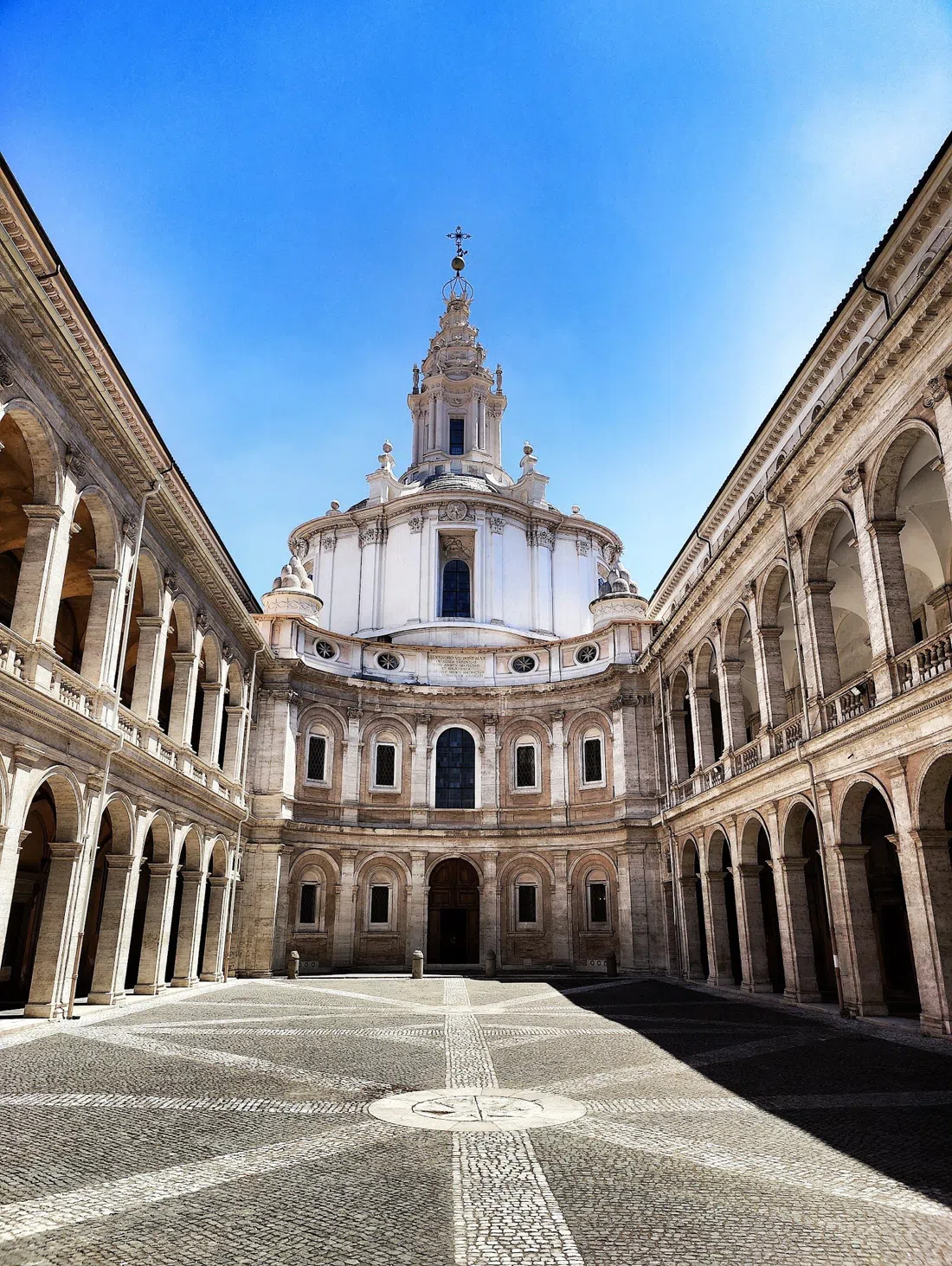
Sant'Ivo alla Sapienza (Sant'Eustachio, five minutes east) is the architects' pilgrimage stop, Borromini's spiralling lantern screwing up out of a courtyard. The interior is generally open only on Sunday mornings for a couple of hours, admits limited numbers, and shuts for July and August entirely, so arrive before the doors open or treat it as a bonus. The courtyard view of the lantern is available most days and is most of the reward anyway. Free.
What a seat on the square costs
Tre Scalini (Piazza Navona 28) is open daily 09:00 to midnight, and its tartufo has been made to the same cocoa recipe since 1946. The pavement terrace seats groups and you can reserve for the front row. At €€€ you are paying for a chair in front of the fountain as much as for the dessert, and since the fountain ledges now carry fines, that chair is the legitimate way to sit and look at the thing for an hour. Decide whether the view is worth it before you sit down, not when the bill lands.
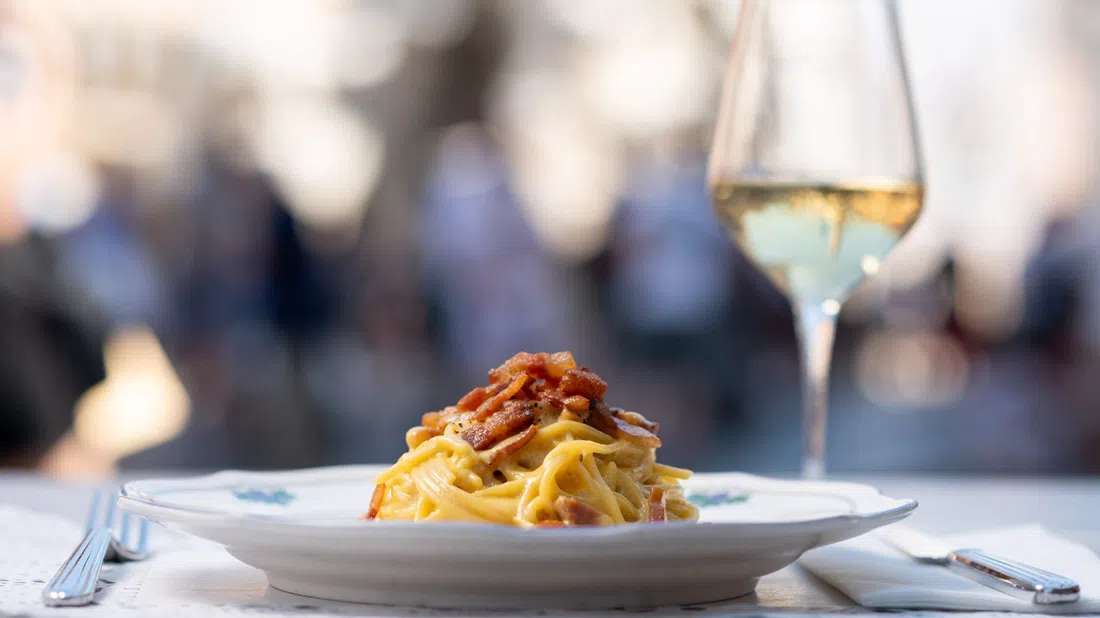
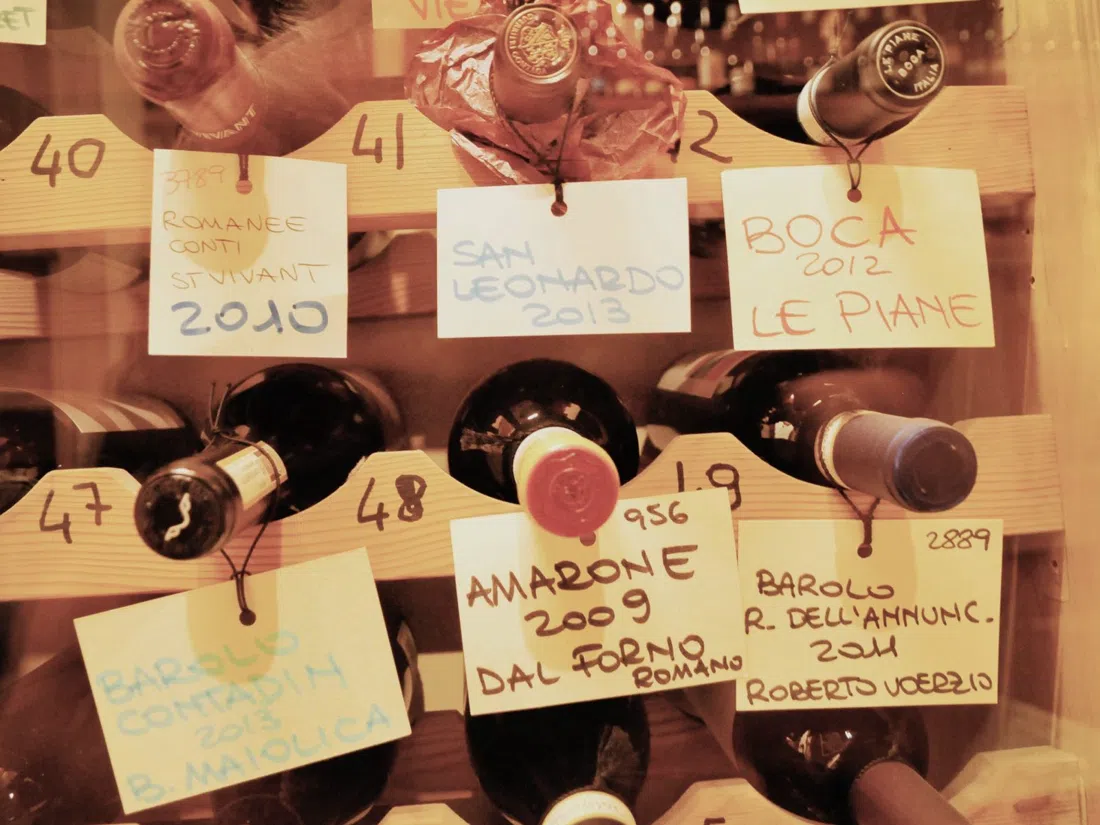
Enoteca Cul de Sac (Piazza Pasquino, a minute south-west) brings the pricing back to earth. Rome's first wine bar, open since 1977, runs 12:30 to 01:00 daily with around 1,500 labels, and €€ buys glasses, cured meats and pâtés at fair central-Rome rates. Inside is very tight, small groups only and no large party bookings, so four or more should plan on the outside tables.
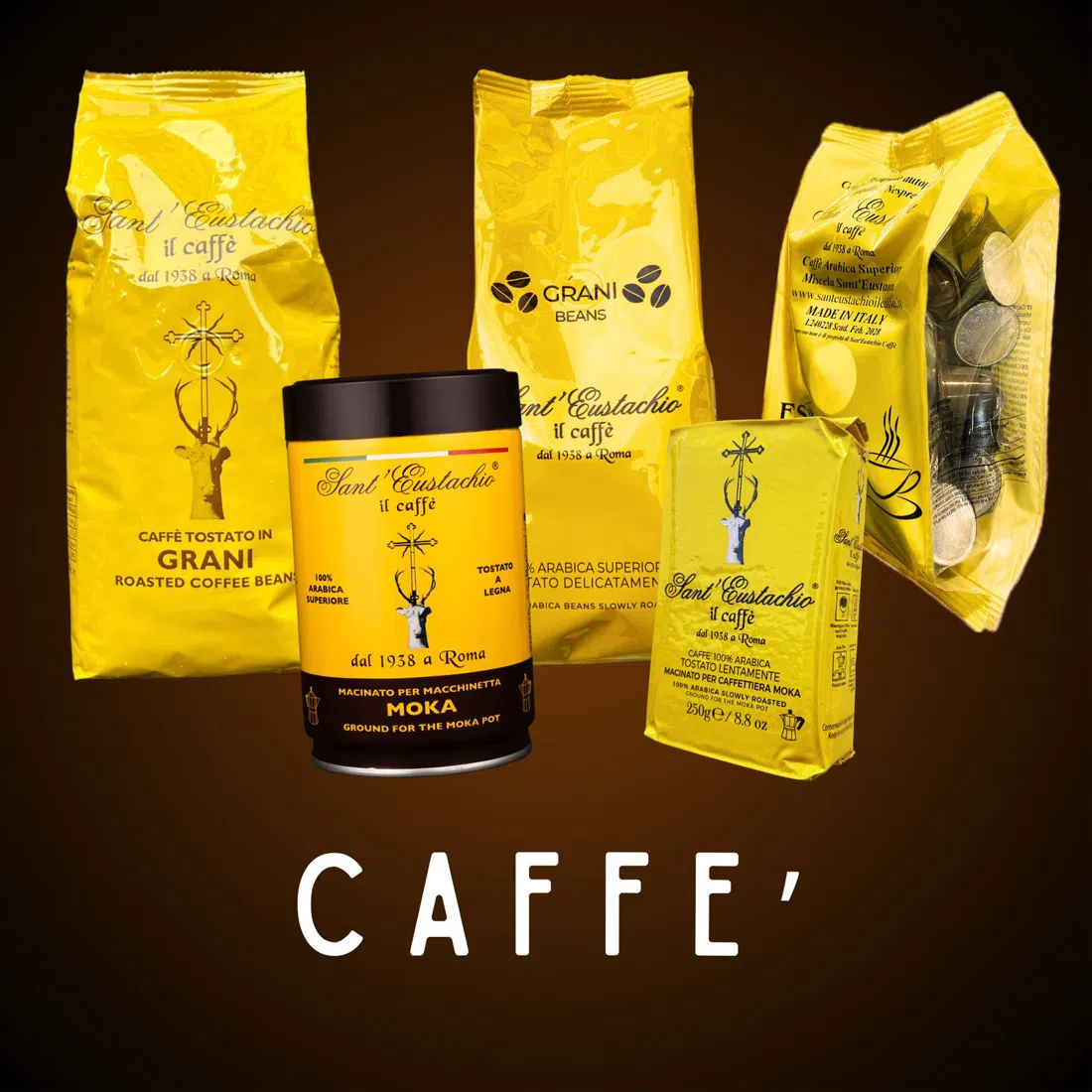
Sant'Eustachio il Caffè (Piazza Sant'Eustachio, five minutes east) covers both ends of a Navona day, because it opens early and runs to 01:00 or later. It is a counter scrum rather than a room. Standing at the bar is around €1.70; sitting is roughly €5 and up, so large groups should split or take the outside tables deliberately rather than by accident.
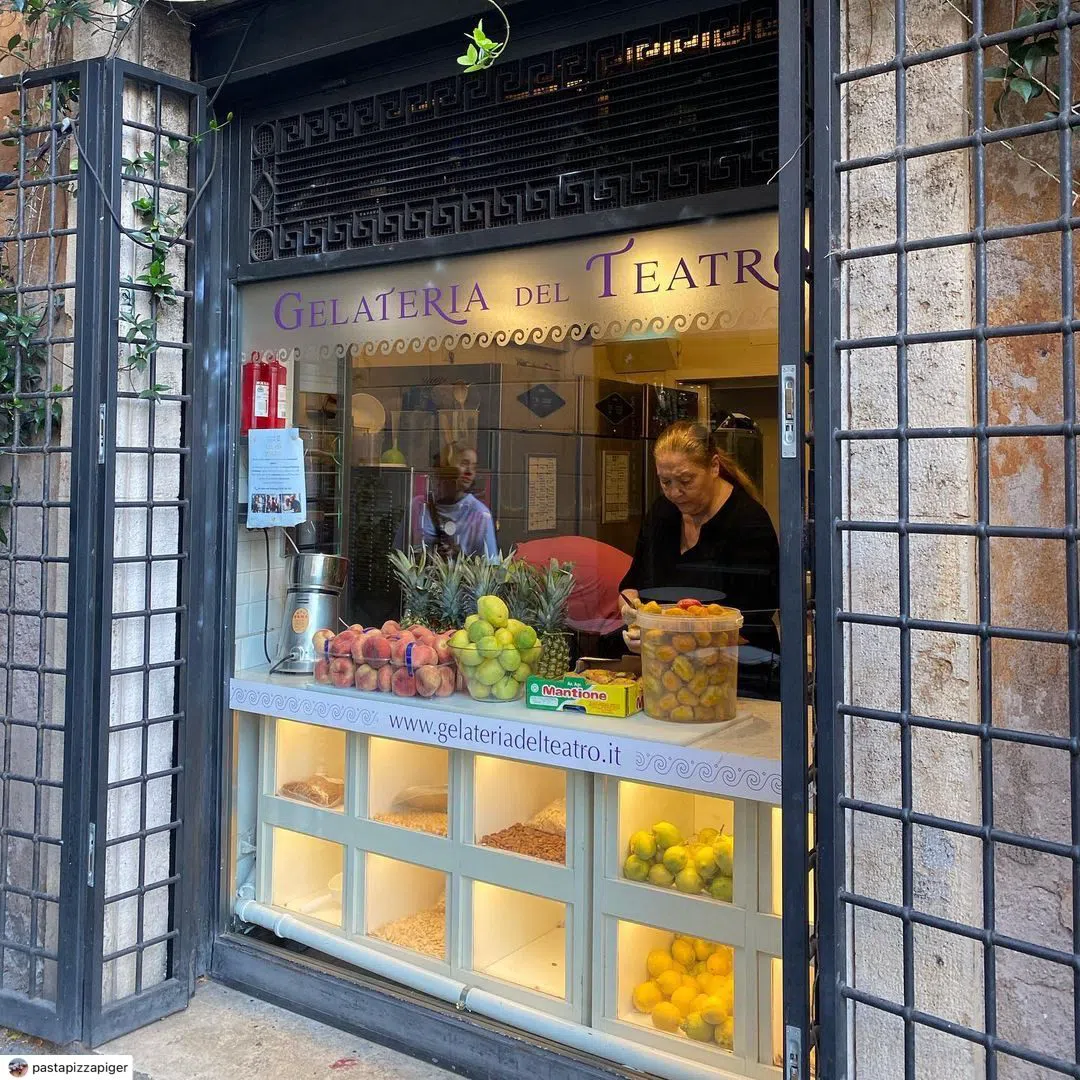
Gelateria del Teatro (Via dei Coronari 65) is the serious gelato answer to the tourist counters on the square itself, open daily 11:30 to midnight. It is a takeaway window with no real seating and queues do build, so go at opening or after 21:00. A few euros a cone.
The one view from above
Terrazza Borromini at Eitch Borromini (west flank of the square) is the only genuine aerial view of Piazza Navona, from a seventeenth-century palazzo Borromini himself worked on. There are fourth-floor dining rooms and an open-air sixth-floor bar, both of which take group bookings and private events, and you reserve by email in advance. That matters most for sunset, which is the entire reason to go. Pricing is €€€€, and the ticketed opera-and-aperitif evenings run well over €100 a head. Book it for the vantage point rather than the menu, and book the sunset slot specifically; the same drink an hour later costs the same and shows you much less.
Walking out past Pasquino
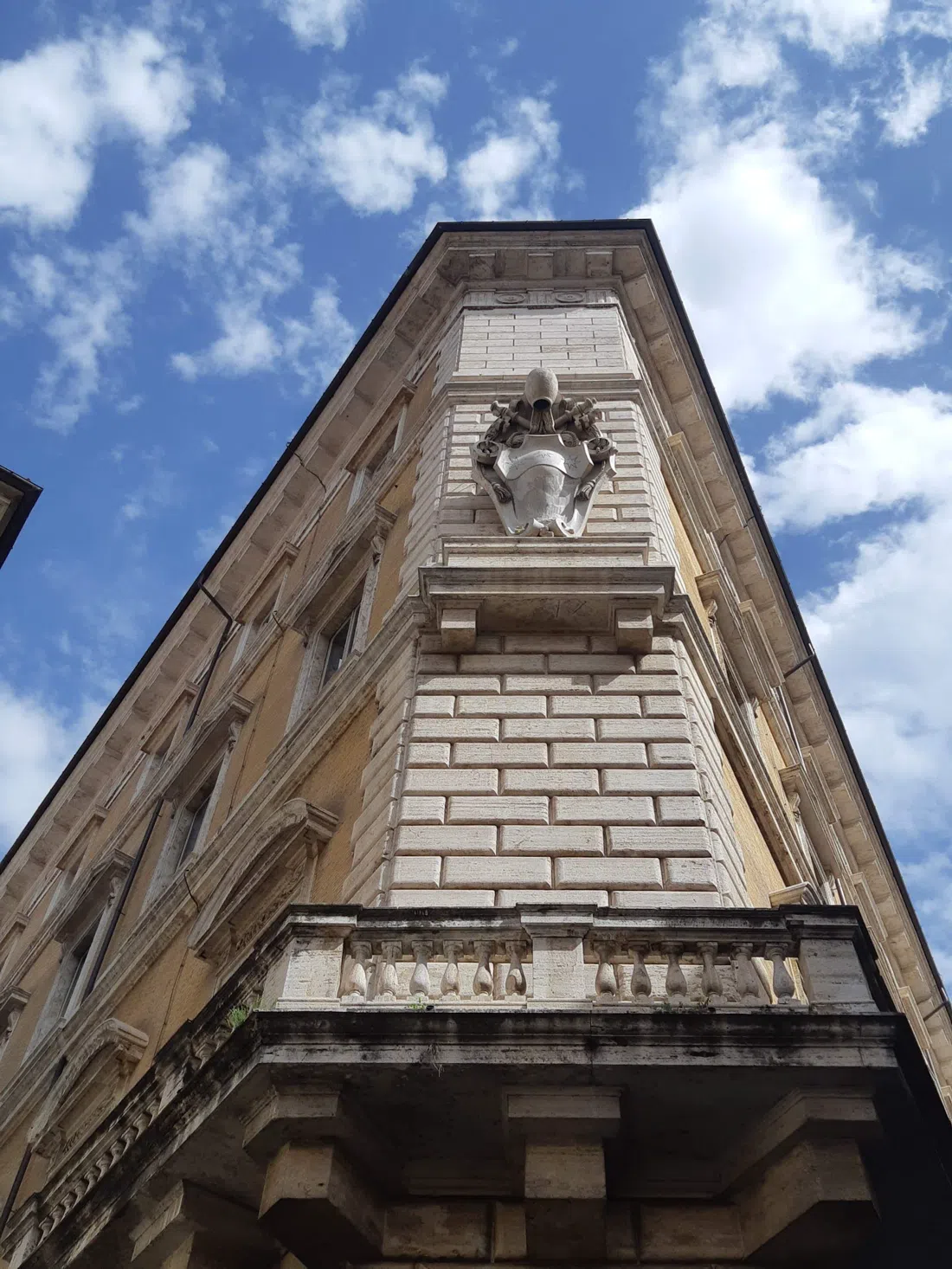
Pasquino (its own small piazza at the south-west corner) is a battered torso dug up in 1501, and Rome's original talking statue. People have been taping anonymous political verses to its base for five centuries and still do, which makes a two-minute stop the detail that turns the walk out of the square into something more than a shortcut. Always visible, free.
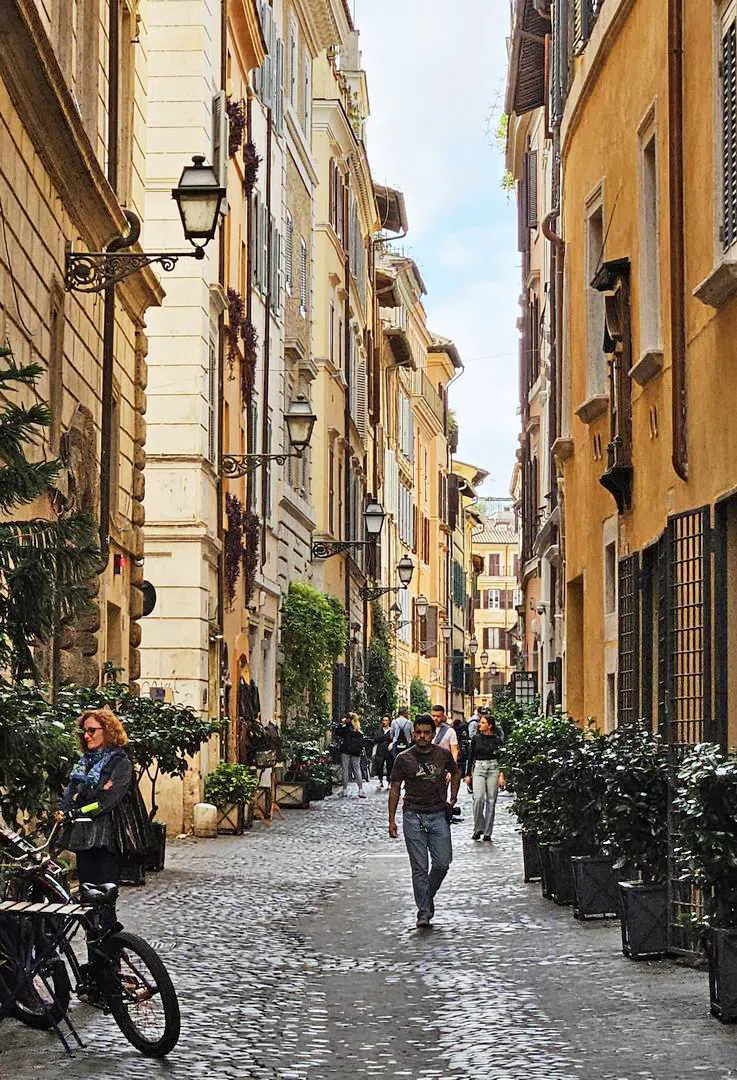
Via dei Coronari (Ponte, immediately north of the piazza) is the release valve. A straight pedestrian line of antique dealers and small shopfronts, named for the medieval rosary-bead sellers who worked the pilgrim route to St Peter's, it is quiet within thirty seconds of leaving the crowd. Walking it costs nothing; the antiques are expensive and the gelato and coffee are not. Most shops close on Sundays and Monday mornings. Twice a year, in mid-to-late May and mid-to-late October, a street fair keeps them open all day under strung lights, and that is the best evening to be here.
At the door or booked ahead
There is nothing to buy for the square. No ticket exists, no timed entry, no queue. What does need arranging in advance is specific and small: the crypt visit at Sant'Agnese in Agone, museum parties of 5 to 25 by phone, the Chiostro del Bramante if you are a group, and the rooftop by email.
A guided option exists and is attached to this page as a separate card. The bookable walks here carry 16,364 traveller reviews between them, the top one rated 5.0 out of 5 from 5,095 reviews, and it runs seven days a week, from 219 USD per person. Access itself is free and unlimited, so what the money buys is narration, pacing and somebody who knows which door is open today. For a family or a small private group wanting the whole centre joined up in one morning, that is a reasonable purchase. For one person who only wants to understand this square, an early arrival and a few euros in lighting coins achieves more.
Is it worth it
Yes, with one condition: stop thinking of it as a sight you do and treat it as a room you sit in. There is no building to enter, no summit to reach and no queue to be proud of surviving. The reward is a stage set that is genuinely beautiful at the right hour, with Bernini's newly cleaned fountain at the centre of it and three remarkable interiors inside a five-minute radius.
It suits first-time visitors, anyone who reads architecture, couples at night, and groups who need an unmissable meeting point. It suits families, with the fines explained to everyone before you arrive. It does not suit anyone hoping to picnic on the steps, which the rules have ended, and it will disappoint anyone who shows up between 11:00 and 17:00 expecting the photographs they have seen.
Best time to go
Between 07:00 and 08:30 the square is effectively yours, the light is low along the length of it, and the coffee counters are already working. From 09:00 the terraces open and the first groups assemble at the fountain. Between 11:00 and 17:00 it is at its fullest, and from 13:00 to 15:00 the free interiors are shut as well. That two-hour window is exactly when to be inside the museum two hundred metres north, in the cloister café, or at a long lunch. From about 17:30 the stone warms up and the rooftop sunset slot is the best seat in the quarter. After 21:00 the piazza empties in stages, the gelato queue collapses, and the wine bar and the coffee counter both run past 01:00.
Days matter more than seasons here. Monday closes the church on the square, the museum on the square and the museum to the north, and shuts most of the antique shops for the morning, so make Monday your walking-and-eating day rather than your interiors day. San Luigi dei Francesi closes on Wednesday afternoons. Sunday morning is the only realistic window for the inside of Sant'Ivo alla Sapienza, and that disappears for July and August, when the heat also makes the mid-afternoon square genuinely unpleasant. Mid-to-late May and mid-to-late October bring the street fair north of the piazza, and those are the two best evenings of the year for combining the square with the street.
Practical notes
No metro station serves Piazza Navona and no taxi enters it; the quarter is pedestrian and the honest answer is that you arrive on foot, with buses dropping you on the two big cross streets a couple of minutes away. That walk-in is also the argument for sleeping nearby, because the seven o'clock version of the square is only available to people who are already in the quarter. Compare rates on the Rome hotel search and look at the small relais and apartment conversions on the side streets as well as the bigger hotels near Piazza Navona, which price on the view.
Carry coins. The chapel lighting boxes take them and nothing else, about €1 to €3 at San Luigi dei Francesi and roughly €2 at Sant'Agostino, and they are the difference between seeing a Caravaggio and seeing a dark rectangle. Cards are otherwise fine everywhere, and museum group bookings go through the 060608 phone line.
On budget, a free day is real here: the square, three churches, the talking statue and the street north of it cost a couple of euros in coins and €1.70 for a coffee standing up. A fuller day with the museum on the square at €13 and the cloister exhibition at around €14, plus gelato, lands near €35 a head. Spending above that means either the €15 seven-day integrated museum ticket, which pays back over a longer stay, or the rooftop at €€€€, or the opera-and-aperitif evening at well over €100 a head, which is a night out rather than a sightseeing cost. For how this quarter connects to the rest of the city, start from the Rome guide.