
Cup your hand under any cast-iron spout in Rome and you are drinking water that entered the city through channels dug when Augustus ran the place. Empires rose and fell around this plumbing; the water never stopped. This is a guide to that story — where to drink it, where to stand beside the machinery, and how to plan a full day around the one thing in Rome nobody charges you for.
Start at the spout: the nasoni
Before you photograph a single Baroque fountain, learn the humble hero. The Nasoni (found citywide, roughly 2,500 of them) are the cast-iron drinking fountains bolted to street corners in every rione of the city. "Nasone" means big nose, after the curved snout the water pours from. They have run day and night since the 1870s, fed by the same ancient aqueducts that supply the grand fountains, and the water is genuinely potable and genuinely cold. Cover the spout's mouth with a finger and water jets up through a small hole on top — that is the drinking fountain, no need to bend to the snout.
They cost nothing, they suit any size of group, and in a July heatwave they will save your trip. Download the free 'I Nasoni di Roma' app before you land; it maps the working spouts and lets you route between them, which matters because a handful get capped in drought years. Fill a one-litre bottle at every stop and you never buy plastic water at tourist prices again. Treat the nasoni as the connective tissue of everything below: the aqueducts feed the spouts, the spouts feed you, and the monuments are simply where that same water is allowed to show off.
The Trevi and its underworld
Everyone starts at the Trevi Fountain (in the Trevi rione, its own tight warren of lanes east of the Corso), and they are right to — but read the door situation first. This is the theatrical terminus of the Aqua Virgo, the aqueduct Agrippa opened in 19 BC and the only one of Rome's ancient lines never to stop flowing. The water tumbling over Bernini's rocks in your photograph is genuinely 2,000-year-old plumbing.
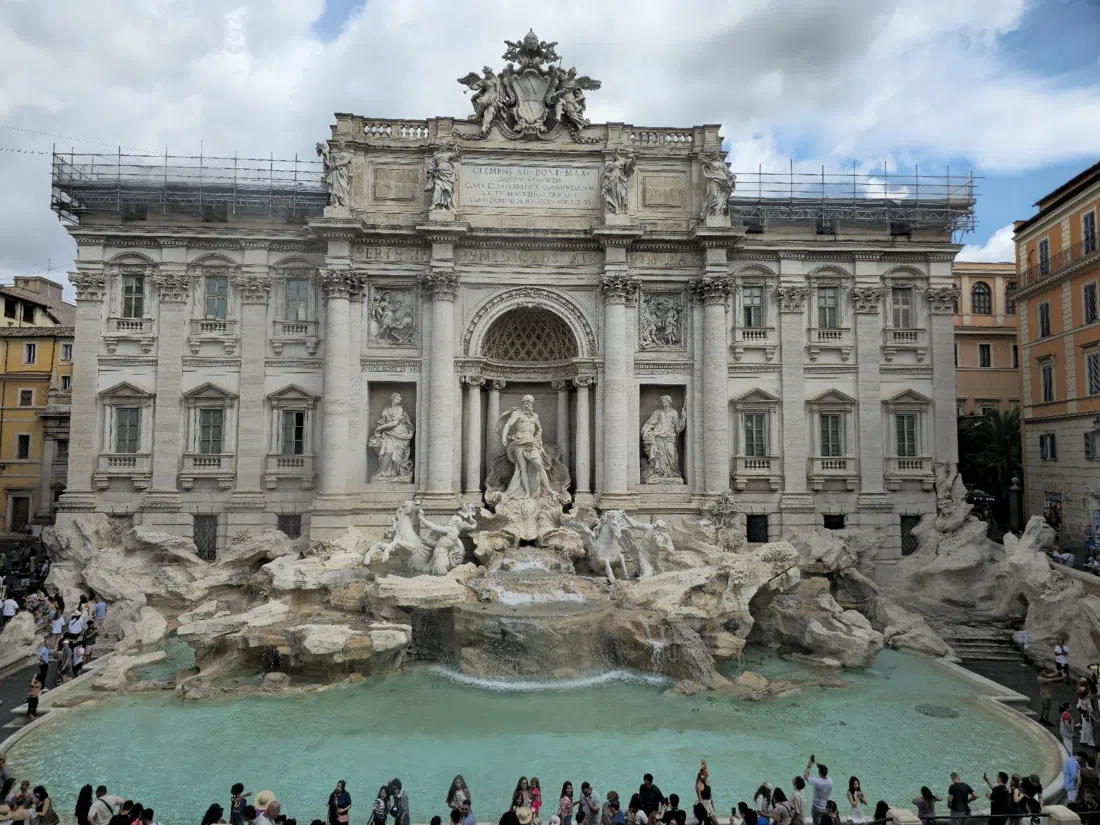
Here is the 2026 reality: since 2 February 2026, non-residents pay €2 to step down to the basin edge, with access running 9am to 10pm and numbers capped to break the crush. Viewing from the upper piazza is still free. Two euros is fair for a slot at the rail, but the real move is to skip the queue entirely and arrive before 8am — the light is better, the square is nearly empty, and you will not be funnelled through a metered gate. Groups are fine up top at any hour; couples wanting the postcard should come at dawn or near closing. Toss your coin left hand over right shoulder if you must; the city fishes out over a million euros a year and gives it to charity.
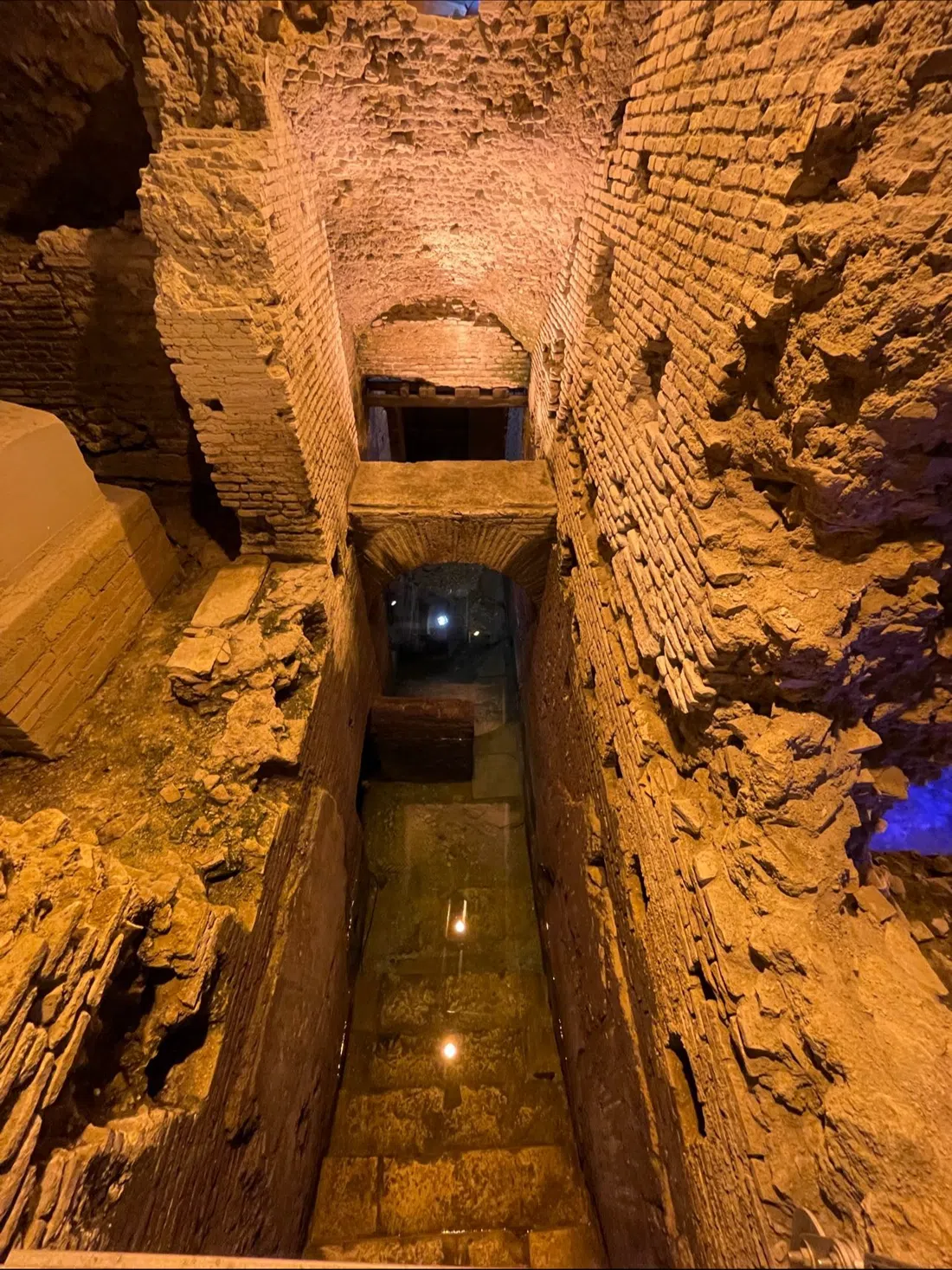
One block away sits the single most underrated stop in Rome. Vicus Caprarius – the City of Water (Trevi, signposted off Vicolo del Puttarello) is an underground archaeological site open Tuesday to Sunday, 11:00 to 17:00. You descend to a Roman insula and stand beside the actual aqueduct cistern feeding the fountain roaring above your head. It is the clearest "how Rome's water works" lesson in the city and it is nearly always empty. Entry is €12 self-guided; the €30 guided tour runs 45 minutes in five languages and is worth it if you want the hydraulics explained. Small groups fit comfortably — for anything over eight, book ahead, because the chambers are narrow.
Baroque showpieces fed by ancient pipes
Rome's grand fountains are not decoration bolted onto squares; each one is the visible mouth of a working aqueduct, and touring them is really a tour of which pope revived which ancient line.
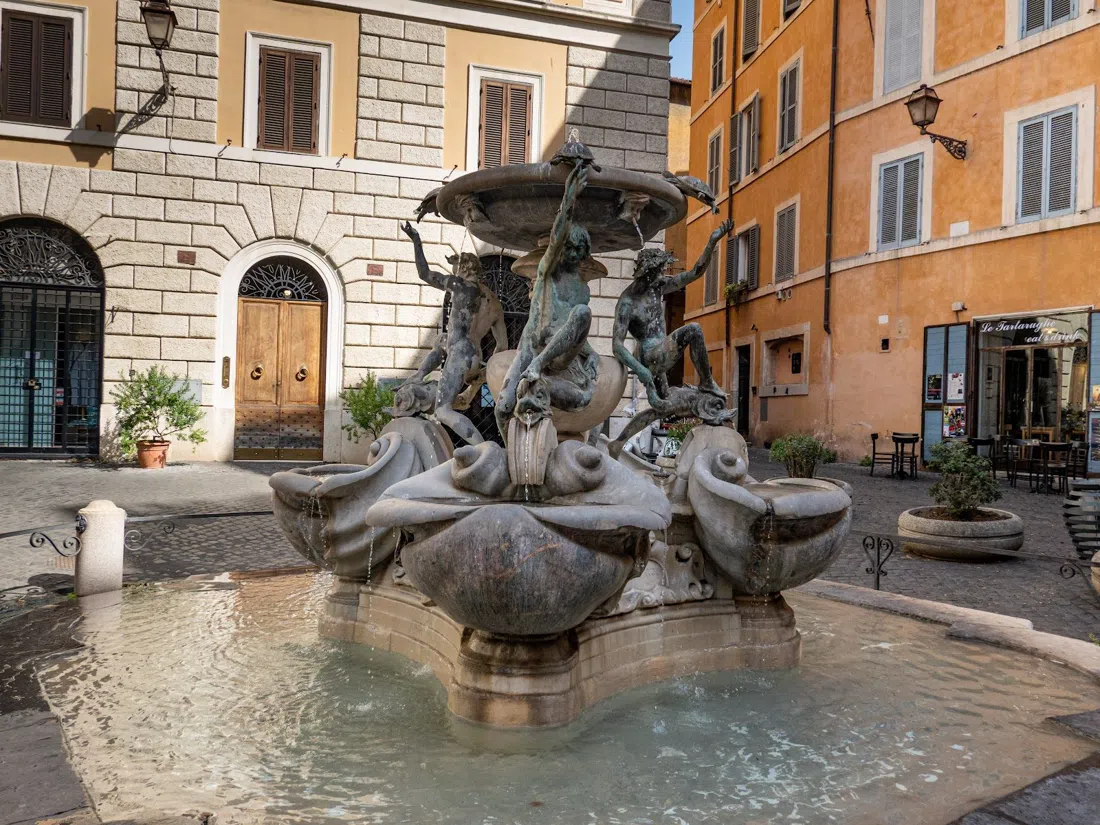
Start in the old Jewish Ghetto at the Fontana delle Tartarughe (Piazza Mattei, in the Ghetto). This late-Renaissance jewel is fed by the Acqua Vergine — the same Aqua Virgo behind the Trevi — and the four bronze turtles that give it its name were a Baroque afterthought added in 1658. The piazza is tiny and residential, so it rewards couples and small groups; a coach party will simply block it. Come in the early evening when the locals are out and the bronze catches the low sun.
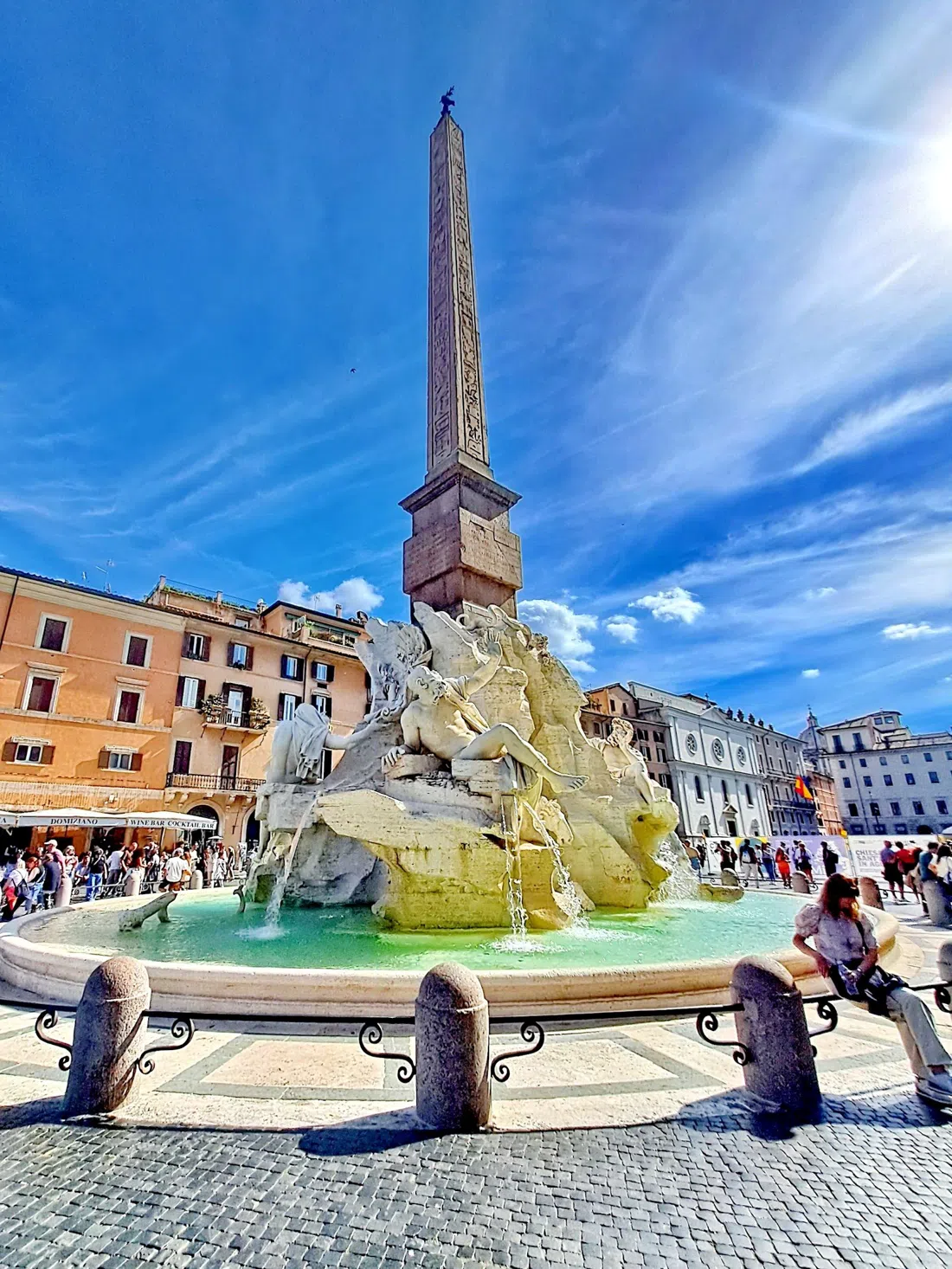
A short walk northwest brings you to the Fontana dei Quattro Fiumi (Piazza Navona), Bernini's four-rivers masterpiece standing over what was Domitian's ancient stadium — which is why the square is that long, curved shape. Innocent X had the Acqua Vergine diverted here in 1647, before it even reached the Trevi, tying Piazza Navona straight into the ancient network. The piazza is vast and pedestrianised, so it handles big groups day or night; it is also thick with overpriced cafés and roving sellers, so drink from a nasone nearby and spend your money elsewhere.
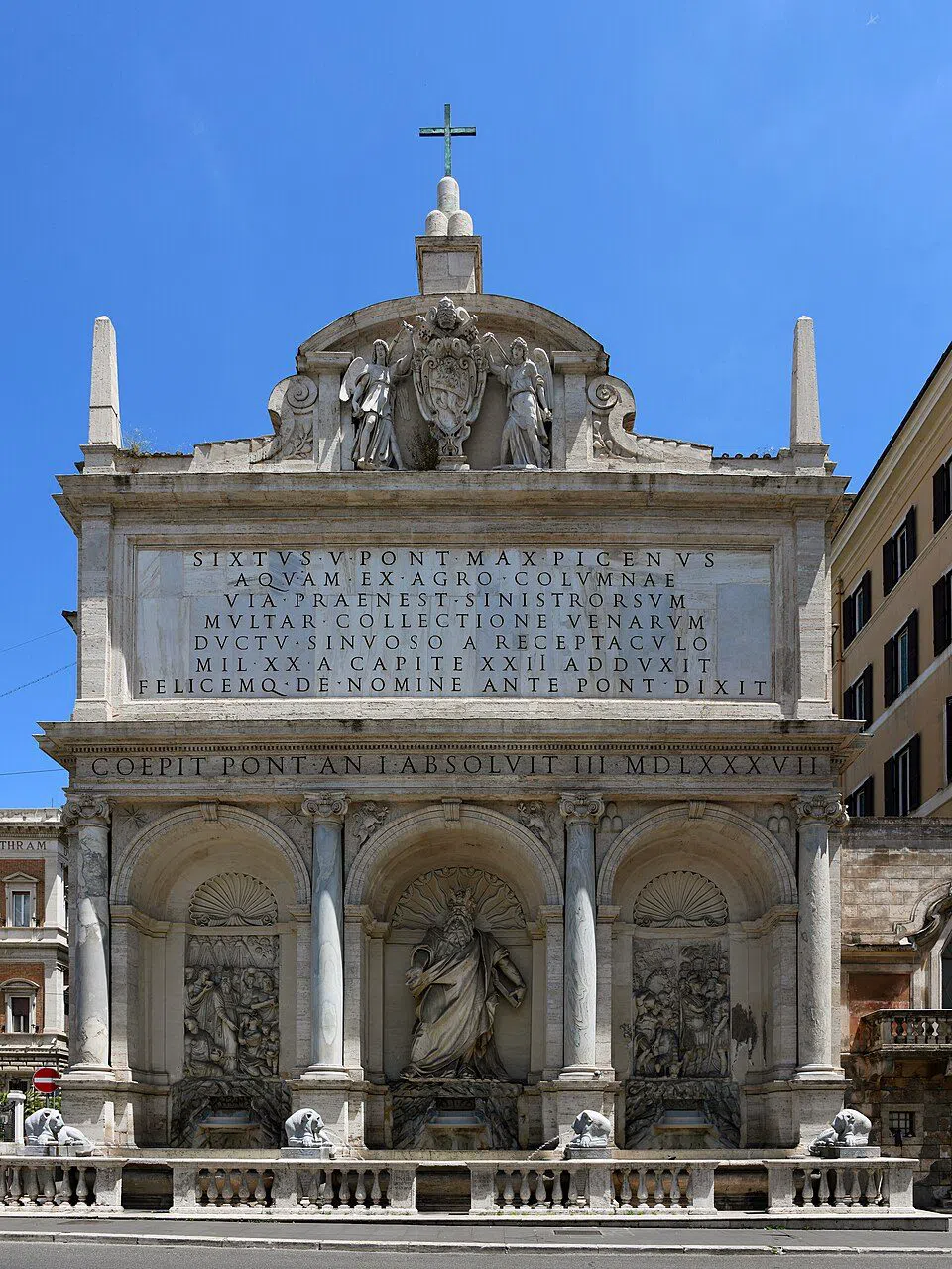
On the other side of the centre, near the Quirinale, is the Fontana dell'Acqua Felice — the Fountain of Moses (Via XX Settembre, Quirinale district). This was the first new monumental wall fountain built in Rome since antiquity, raised in 1585–88 to mark the terminus of Sixtus V's restored Acqua Felice. That aqueduct revival is the hinge of the whole story: it reawakened Rome's fountains after centuries of medieval decline. The monument sits on a narrow, traffic-heavy pavement, so it is a quick photo stop for a couple or a pair, not somewhere to gather a crowd.
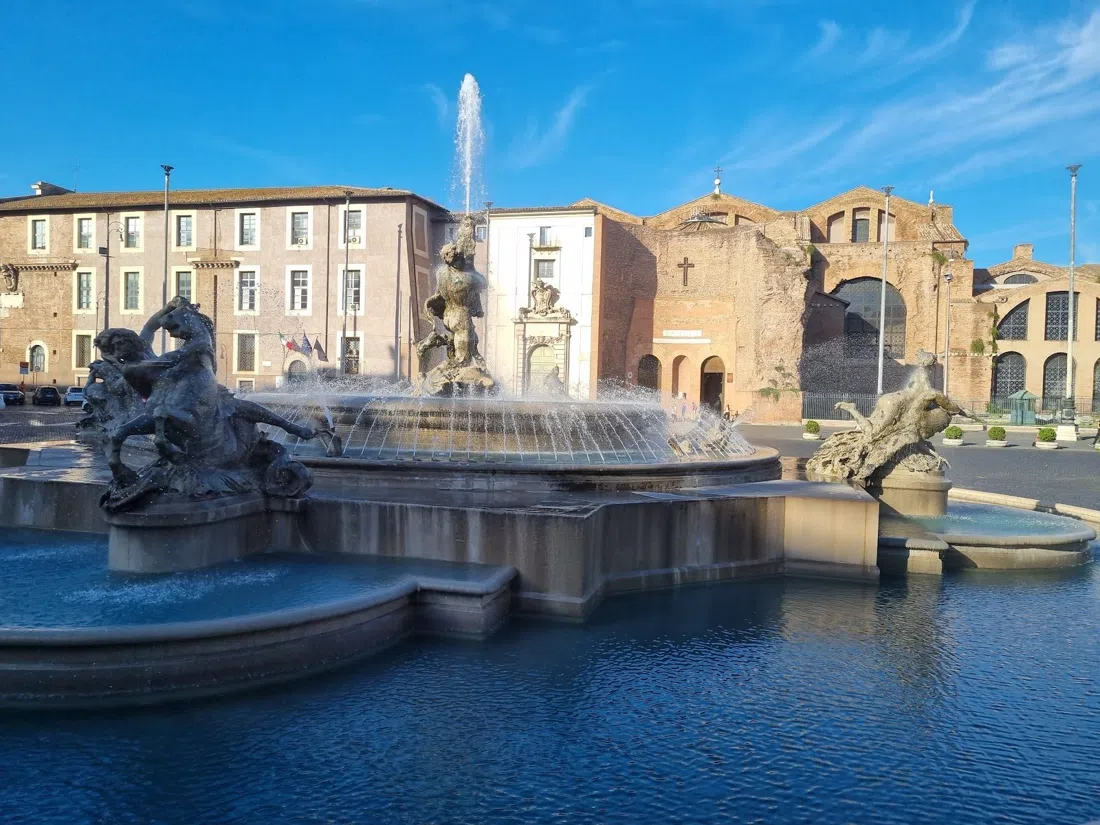
Close your Baroque loop at Fontana delle Naiadi (Piazza della Repubblica), the show-fountain of the Acqua Marcia Pia, built 1888–1901. The bronze nymphs caused a scandal when they were unveiled; today they anchor a busy traffic circle ringed by a grand colonnade. It is a fitting modern bookend — proof the tradition of dressing an aqueduct terminus in sculpture ran straight into the industrial age. There is ample room for groups, but the fountain sits mid-roundabout, so appreciate it from the colonnade side and mind the traffic. It is also a two-minute walk from Termini and the Repubblica metro, which makes it a natural start or finish.
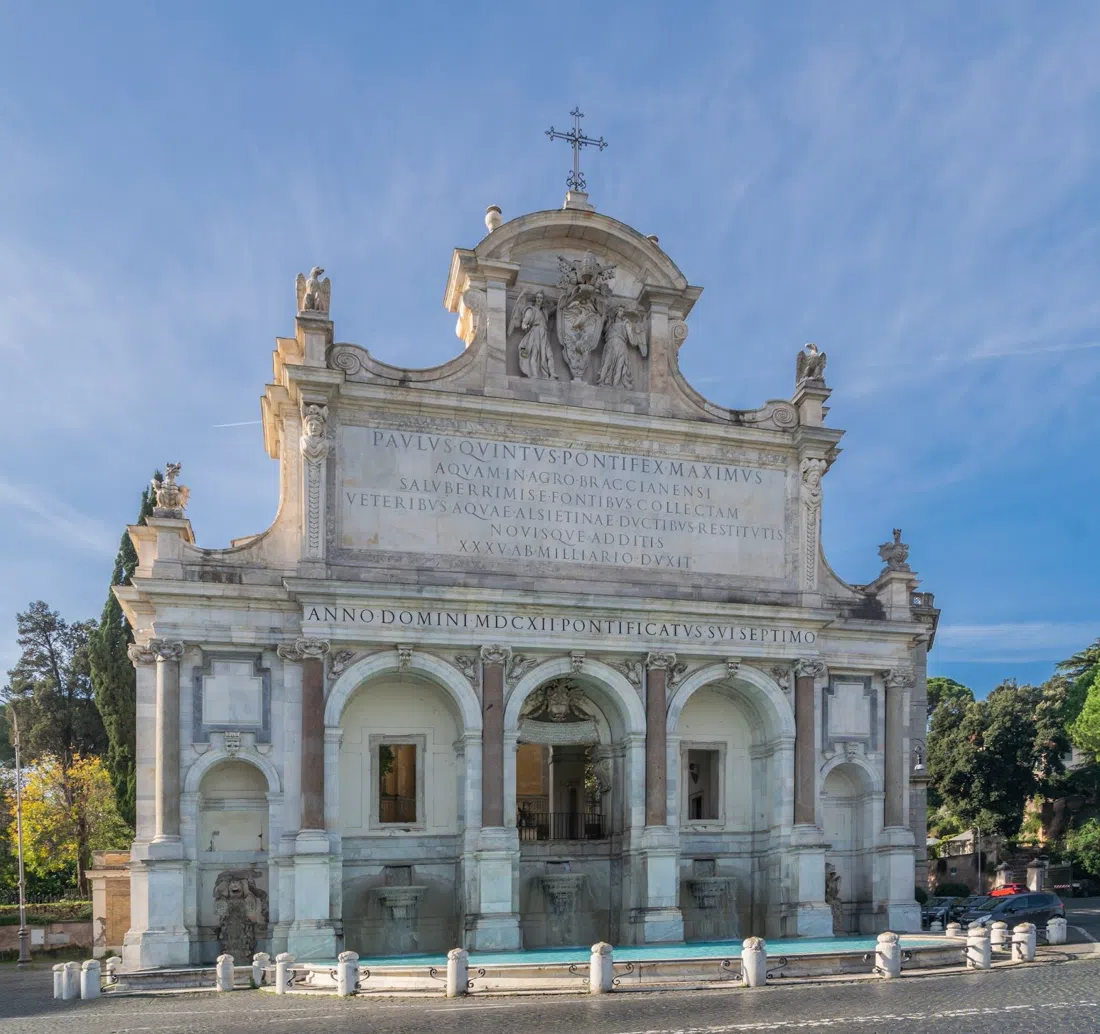
For the grandest terminus of all, cross the river and climb the Gianicolo to the Fontana dell'Acqua Paola — locals call it Il Fontanone, the big fountain (Gianicolo hill, above Trastevere). Built in 1612, it was the prototype Bernini's Trevi would later answer, and it marks the end of the restored Aqua Traiana running in from Lake Bracciano. The open-air terrace is free and roomy enough for any group, but the approach is a steep haul — take a taxi up and walk down. Face east at golden hour for the most cinematic water-and-skyline shot in the city, rooftops and domes stacked below you.
Out to the engineering: arches, gates and drains
The fountains are the flourish. To understand the achievement, go and stand under the raw infrastructure — and here Rome hands you some of its emptiest, cheapest sights.
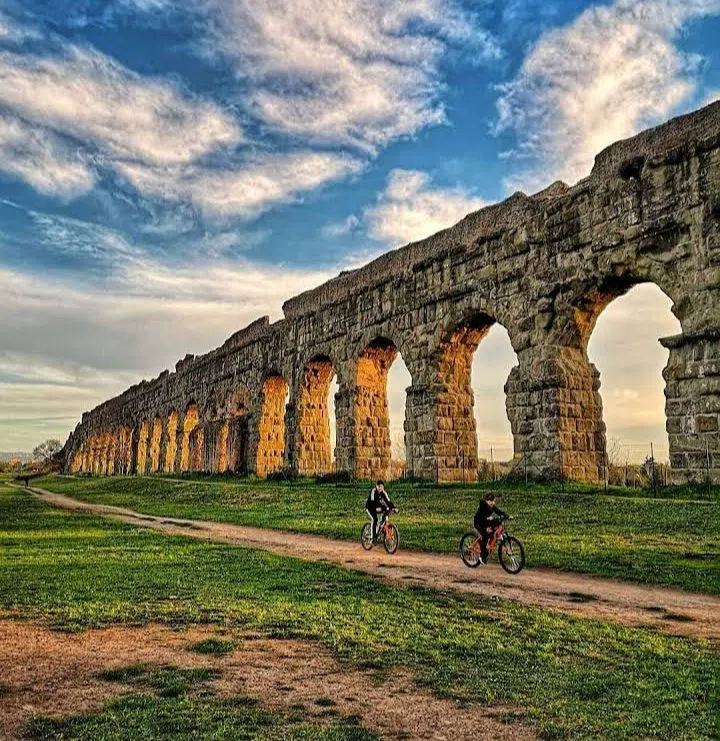
Take Metro A to Giulio Agricola and walk into Parco degli Acquedotti (Tuscolano, southeast Rome), 240 hectares of open field threaded by the monumental arches of the Aqua Claudia. This is the postcard image of Roman engineering — the one you have seen in a hundred films — and it is free, open dawn to dusk, and blissfully uncrowded. The space is ideal for large groups, picnics and slow walking tours; bring water from a nasone and food from a nearby market, because there is little on site. Morning light through the arches is the reason photographers set alarms.
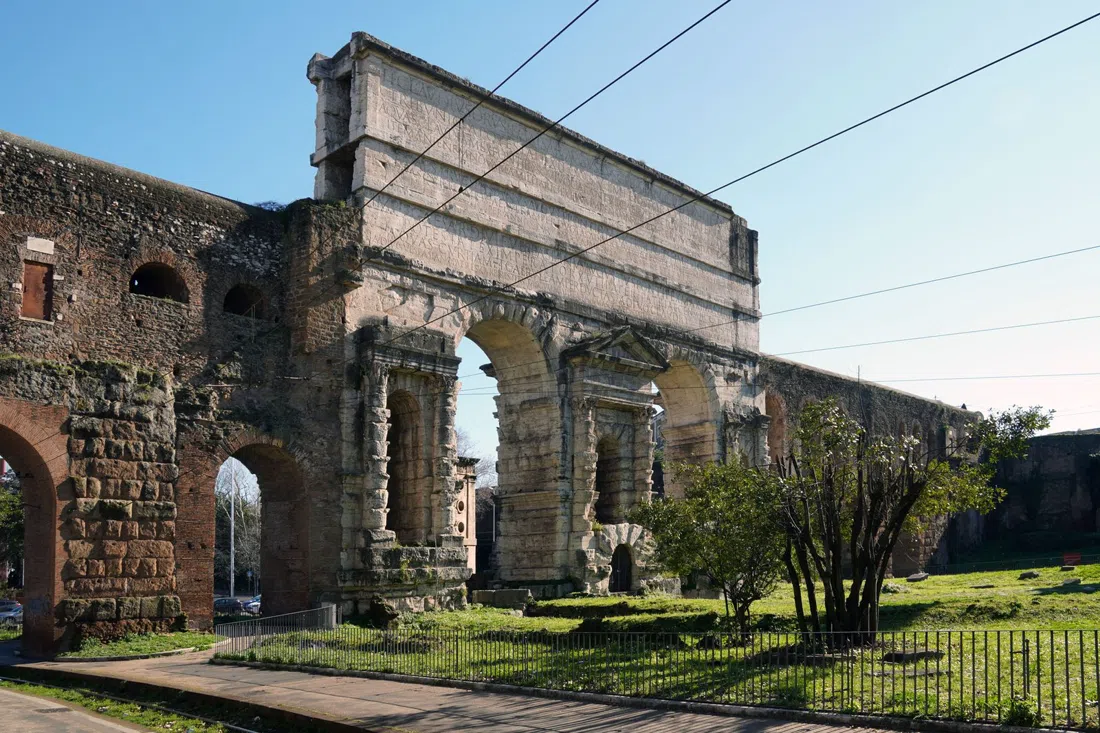
Back towards the centre, on a traffic island at Porta Maggiore (Esquilino, east of Termini), stands the single most spectacular surviving aqueduct structure in the city. This is where the Aqua Claudia and the Anio Novus entered Rome in 52 AD, and you can still see their twin channels running across the top of the gate. It is a free open-air monument with roomy surrounds, fine for groups — but it is marooned in busy tram-and-car traffic, so keep everyone on the pavement and cross with care.
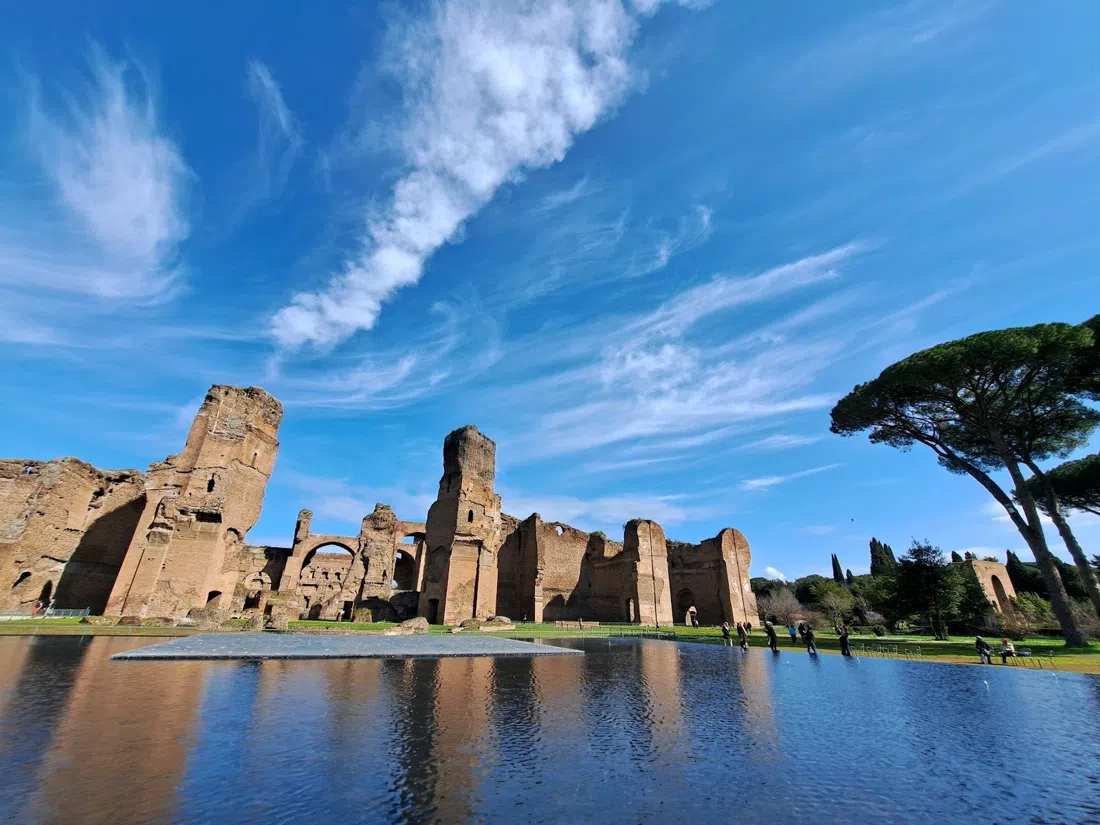
Water is also the reason the great imperial baths existed, and in 2025 it returned to the largest of them. At the Baths of Caracalla (Aventine, near Circus Maximus), the 'Lo Specchio' installation brought water back to the 3rd-century complex after roughly 1,500 years, finally making the vast bathing machine legible — you can read the scale of the pools instead of guessing at it. The site is ticketed at around €8–10, open Tuesday to Sunday (and Monday afternoon), and it is big enough to swallow school parties and tour groups without feeling crowded. Audio and guided options are available; give it a good ninety minutes.
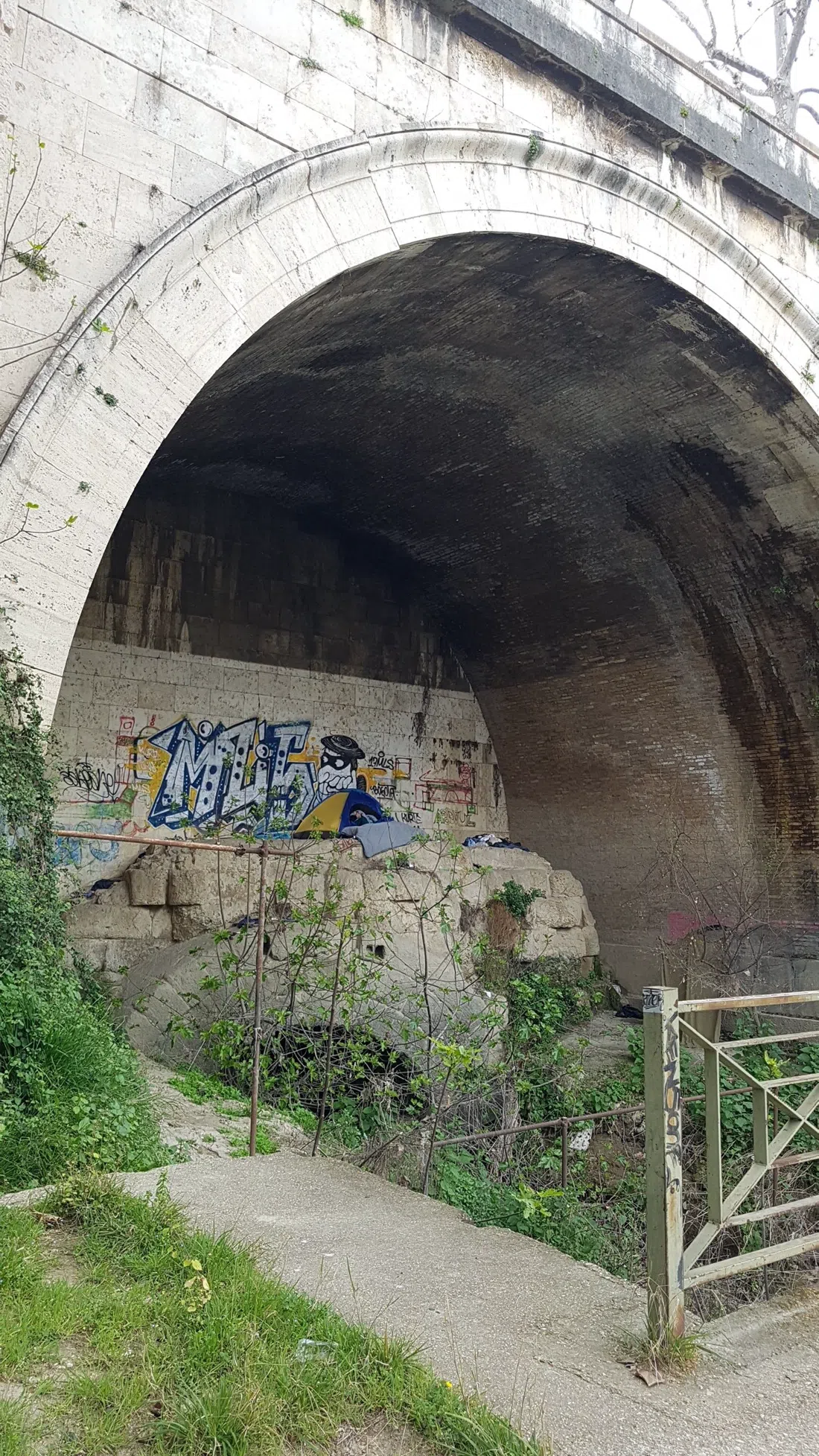
Finally, the half of the story nobody photographs: drainage. The Cloaca Maxima (viewable from the Tiber embankment near Ponte Rotto, and inside the Roman Forum) is the 6th-century-BC 'Great Sewer', and it is still doing its job after 2,500 years. The outlet by the river is free to see from the public embankment and suits any group; the in-Forum stretch needs a Forum ticket (around €18). Without the Cloaca draining the valley floor, the marshy centre of Rome could never have been paved, built on, or plumbed — the drains are what made the fountains possible. It is the honest bookend to a water tour: not every triumph of Roman engineering is beautiful, but this one has outlasted the lot.
The route, and how to link it
Done in a day, the logical order runs centre-out: dawn at the Trevi, straight into Vicus Caprarius when it opens at 11, then the Ghetto and Piazza Navona on foot, lunch, and an afternoon push out to Porta Maggiore or the aqueduct park. Save the Gianicolo for golden hour. That is a full, hot, rewarding day of walking, so plan your beds near the centre — start with a Rome hotel search and stay inside the historic core or Monti so the fountains are on your doorstep. For everything beyond water — food, neighbourhoods, opening hours — the wider Rome guide fills in the gaps.
Practical notes
Transport. Most of the central fountains are an easy walk apart; wear real shoes, the cobbles are brutal. Metro A links the far-flung sights: Repubblica for the Naiadi, Giulio Agricola for the aqueduct park. Porta Maggiore is a tram hub (lines 5, 14, 19). The Gianicolo has no metro — take a taxi up. A single 100-minute ticket is €1.50; a 24-hour ticket is €7 and pays off on an out-and-back day.
Cash and cards. Cards work almost everywhere, but carry €30–40 in coins and small notes for the Trevi basin fee (€2), site tickets, and the odd cash-only espresso bar. Ticketed sites — Vicus Caprarius, Caracalla, the Forum — take cards at the door.
Timing. Fountains are lit and magical after dark and the crowds thin, but ticketed sites close by evening: Vicus Caprarius shuts at 17:00, Caracalla is closed all day Monday until the afternoon. Do the paid interiors by day, the free fountains by night.
Budget. This is the cheapest serious day out in Rome. The nasoni, Piazza Navona, the Ghetto, Il Fontanone, Porta Maggiore and the aqueduct park cost nothing. Realistically budget €40–60 a head if you add Vicus Caprarius (€12–30), Caracalla (~€8–10), a Forum ticket (~€18) and lunch — less if you picnic. The water, at least, is free forever.
Groups vs couples. Big groups do best in the open spaces — the aqueduct park, Piazza Navona, Il Fontanone's terrace, Caracalla. Couples get more from the tight, atmospheric stops: the Turtle Fountain, the lanes around the Trevi at dawn, the underworld at Vicus Caprarius. Book the guided options ahead for anything over eight people; the narrow sites can't take a crowd on the door.