The bees give it away. Three gold bees on a stone shield, the Barberini crest, turn up on fountains and doorframes all over the centre of Rome, and in a handful of rooms they are not carved at all but painted, floating in an open sky where a plaster vault ought to be. Between the 1620s and the end of that century Rome's painters stopped decorating ceilings and started dissolving them, and a family that produced one pope paid for the loudest example of it. The walk below takes those painted heavens in order, beginning with the chapel that actually carries the family name and ending at the convent that shows you how the trick is built.
The Barberini chapel most visitors walk straight past
The chapel itself is not in the palace. It is in Basilica di Sant'Andrea della Valle (Sant'Eustachio, on Corso Vittorio Emanuele II), built for Maffeo Barberini while he was still a cardinal, years before the 1623 conclave made him Urban VIII. That timing is the whole point of the room: a family statement made on the way up rather than from the top, Counter-Reformation ambition in its most calculated register, sitting in a parish basilica that anyone can walk into for nothing.
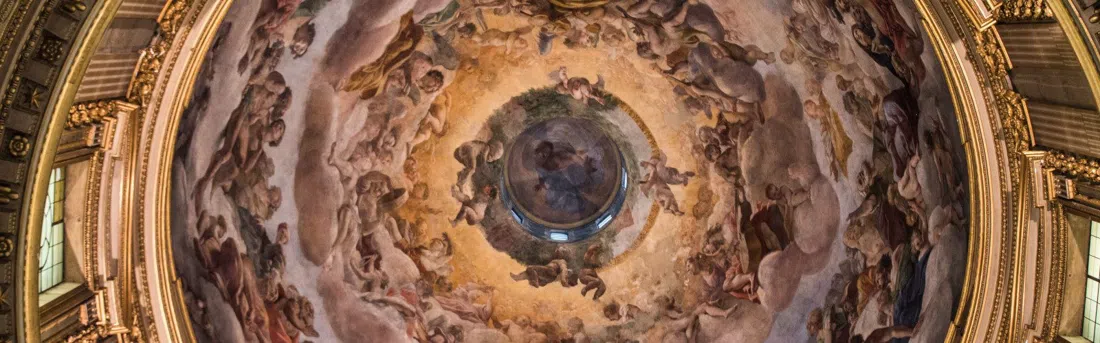
Do not stop at the chapel. Sant'Andrea della Valle also holds Lanfranco's Assumption in the dome, the fresco that won Rome's most famous artistic quarrel. Domenichino had the pendentives below; Lanfranco took the vault and filled it with a rising cloud of figures that made the older man's cooler, more sculptural manner look like yesterday's argument. Stand under the crossing and you can see both approaches in one glance, which is the most useful five minutes of art history in the city.
Entry is free and there is no booking. It is a working basilica, so plan around Mass rather than through it, and expect company: Act I of Tosca is set here, and tour parties of opera-minded travellers arrive in clusters. Groups are fine outside services. Couples get the better deal, because mid-morning on a weekday the crossing is close to empty and the light through the drum is at its best.
The ceiling that turned a family into a sky
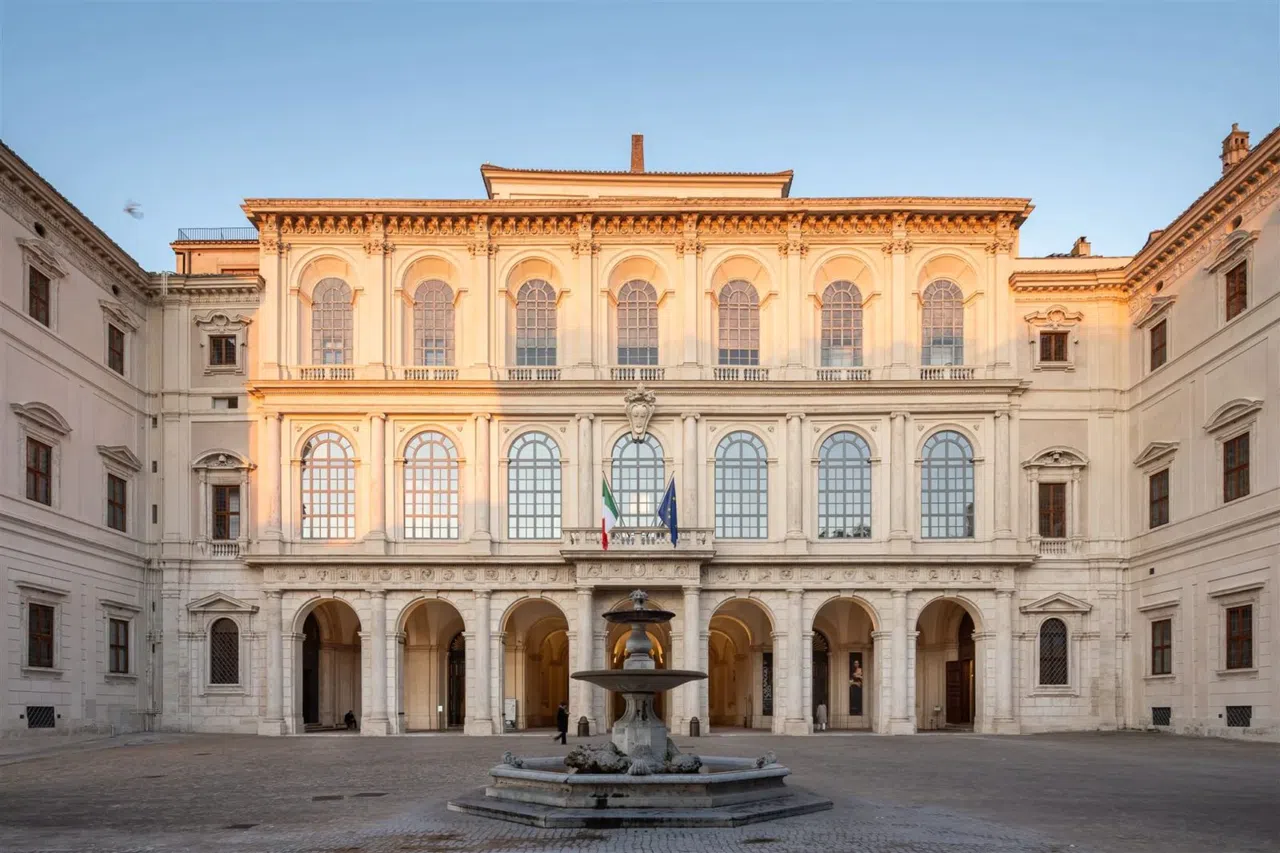
A fifteen-minute walk uphill and you reach the thing the whole itinerary is built around. Palazzo Barberini — Gallerie Nazionali d'Arte Antica (rione Trevi, at the top of Via delle Quattro Fontane) holds Pietro da Cortona's Allegory of Divine Providence, painted across the great salon between 1632 and 1639. Divine Providence crowns the Barberini bees with a wreath of stars while a painted architectural frame opens on all four sides and figures spill over its edge into the room. This is where Roman High Baroque illusionism begins. Everything else on this list is, one way or another, a response to it.
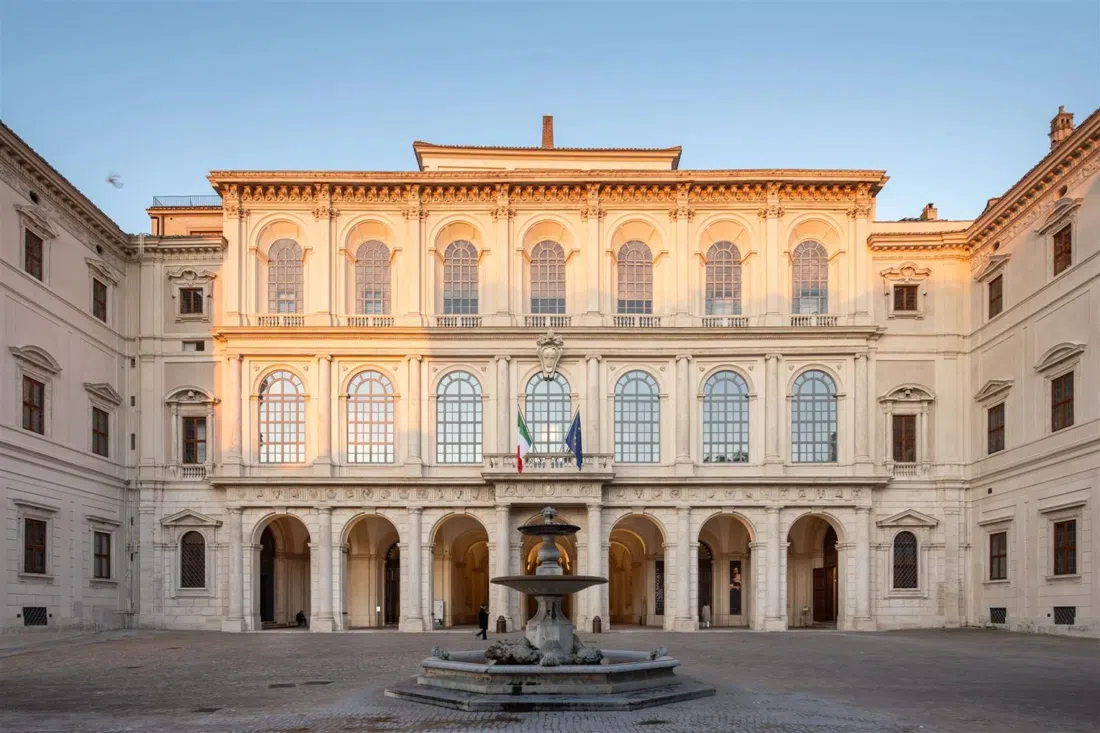
Give the salon twenty minutes rather than two. The frame is the joke, a heavy fictive cornice that the figures ignore completely, and it only works if you walk the length of the room and watch the architecture refuse to stay still. The gallery around it is worth the ticket on its own, but ceiling-first is the honest order here.
Tickets are €15 full, €2 for EU citizens aged 18 to 25 and free under 18, and the ticket is a 20-day combined one with Galleria Corsini, so there is no reason to rush the second half. Guided groups must book a slot and use whisper radios, with a maximum of roughly 25 people per guide. That matters if you are travelling with a party, because turning up as an unbooked group of thirty will not work. Independent visitors and couples can simply buy on the day, though a booked slot saves queueing in high season.
Two Jesuit ceilings arguing across the Pigna
Chiesa del Gesù (Pigna, on the piazza of the same name) is where the illusion turns physical. Baciccio's Triumph of the Name of Jesus fuses stucco and paint so completely that the fall of the damned appears to leave the vault altogether and drop into the nave: figures modelled in relief, shadows painted onto the coffering to sell it, and no clean line between the two. It is the most audacious single trick in Rome, and it is free.
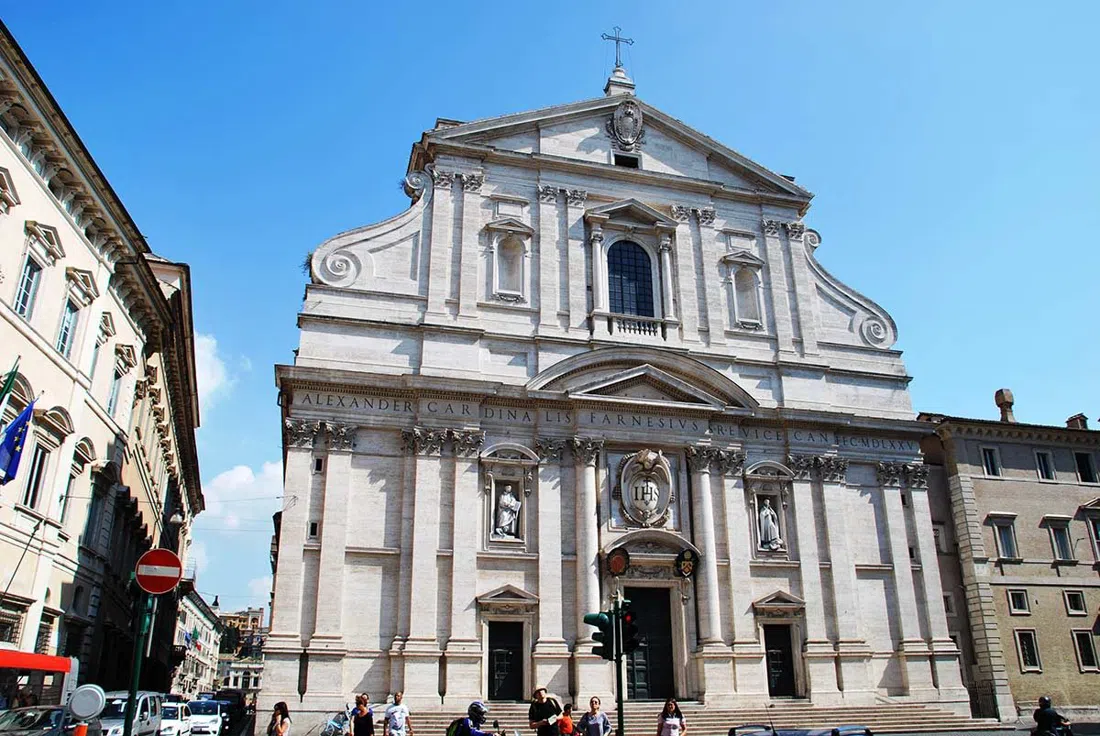
The 17.30 baroque machine spectacle, when the altarpiece mechanism moves to reveal the statue of St Ignatius, draws a crowd that fills the nave. Arrive well before if you want the ceiling to yourself, or come mid-morning and skip the show entirely. The frescoed corridor to the Rooms of St Ignatius, next door, is part of the same free visit and is one of the calmest interiors in the centre; a donation is appreciated.
Five minutes away, Chiesa di Sant'Ignazio di Loyola (Pigna, off Via del Corso) is the purer demonstration. Andrea Pozzo's Apotheosis of St Ignatius runs the whole nave, and where the crossing dome should be there is a flat canvas painted to look like one. Find the brass disc set into the floor: that is the single correct viewing point, and the reason to position any group there rather than letting them wander. Step ten metres off it and the fake dome buckles visibly, which is more instructive than the illusion itself. A €1 coin lights the vault at the mirror; bring change.
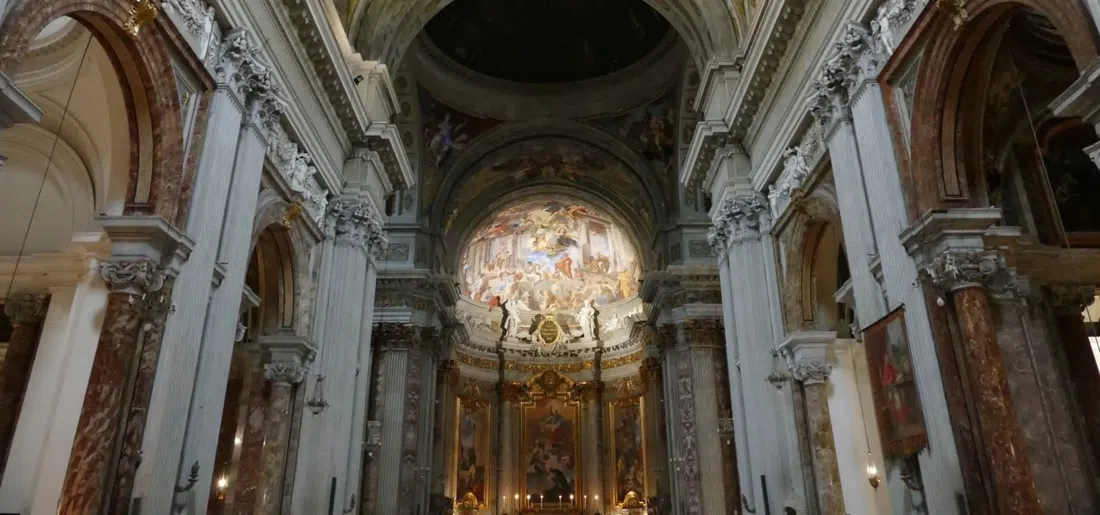
2026 is the church's 400th anniversary, with evening openings and organ concerts under the vault. If your dates allow, take an evening slot: artificial light on Pozzo's architecture is closer to what he designed for than midday glare. Entry is free and groups are fine.
Cortona's quieter cycle and a Baciccio thirty years on
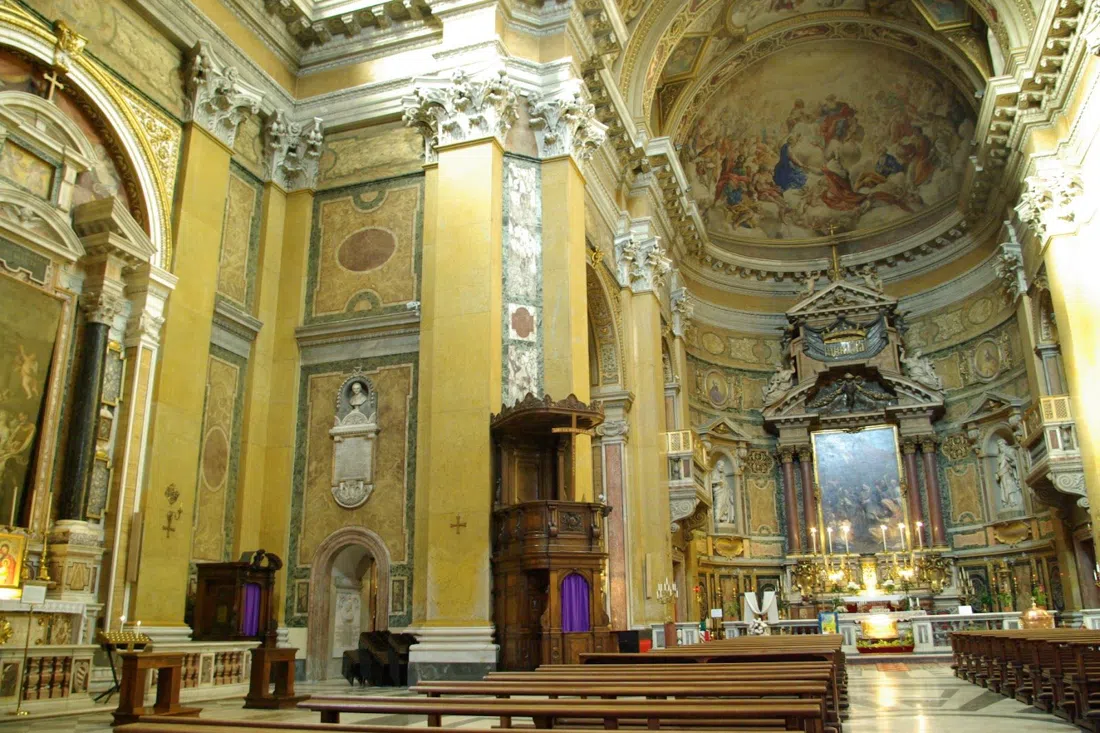
If the Gesù is crowded, Chiesa Nuova (Santa Maria in Vallicella) (Parione, on Corso Vittorio Emanuele II) is the corrective. Cortona spent roughly twenty years on the nave, dome and apse here, and it remains by far the least visited of his great Roman interiors despite sitting on one of the busiest streets in the city. Mid-afternoon it is genuinely quiet. The adjoining Oratorio dei Filippini and Borromini's clock tower are next door, so this is the stop that rewards lingering rather than ticking.
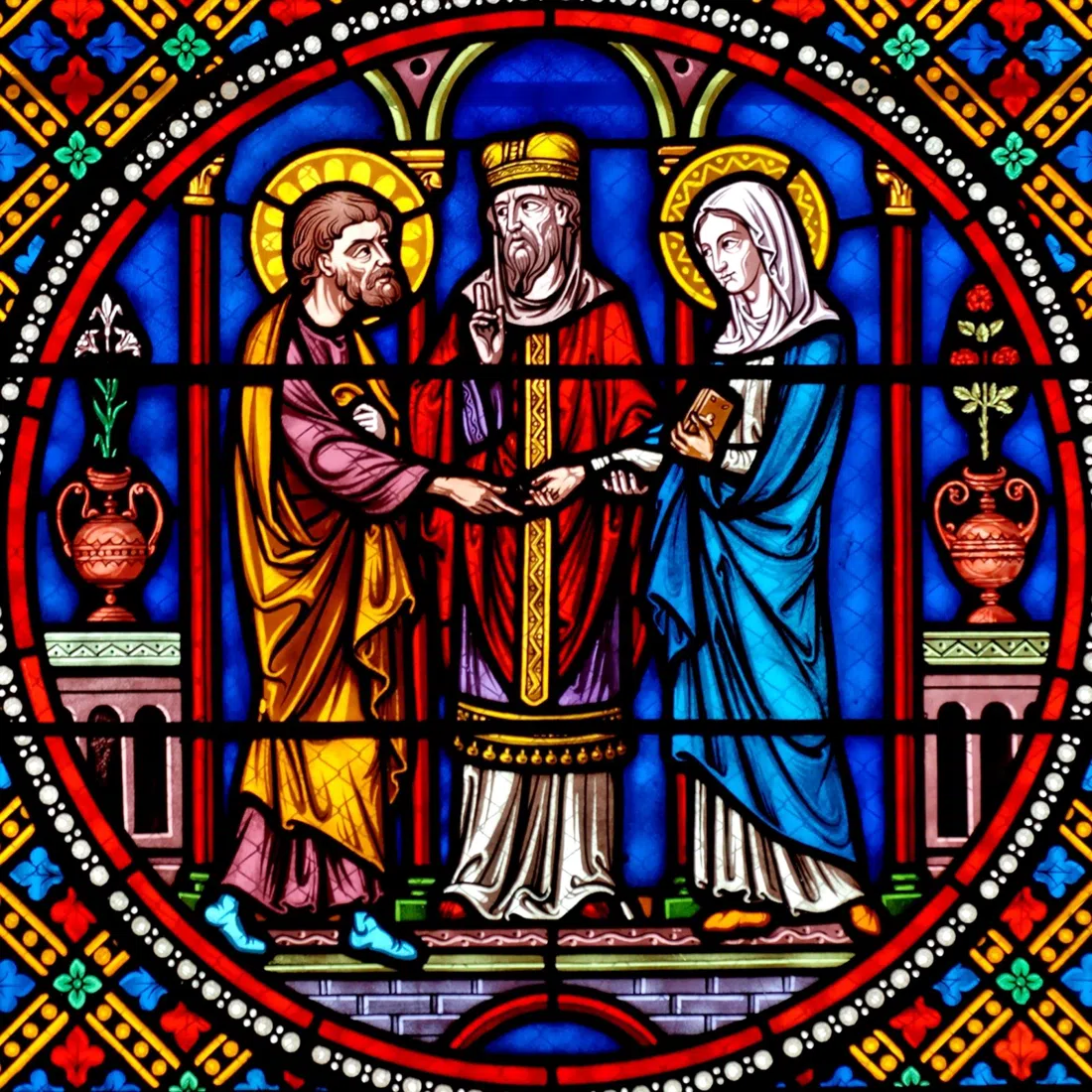
For the other end of the story, Basilica dei Santi XII Apostoli (rione Trevi, on Piazza dei Santi Apostoli) has Baciccio's late Triumph of the Franciscan Order together with Odazzi's falling angels: the same illusionist grammar as the Gesù, three decades on, worked with a lighter hand. Most visitors walk past the portico on their way to the Trevi without ever going in. The large portico entrance handles arrivals well, so groups are easy here; it is free, in Franciscan care, and takes fifteen unhurried minutes.
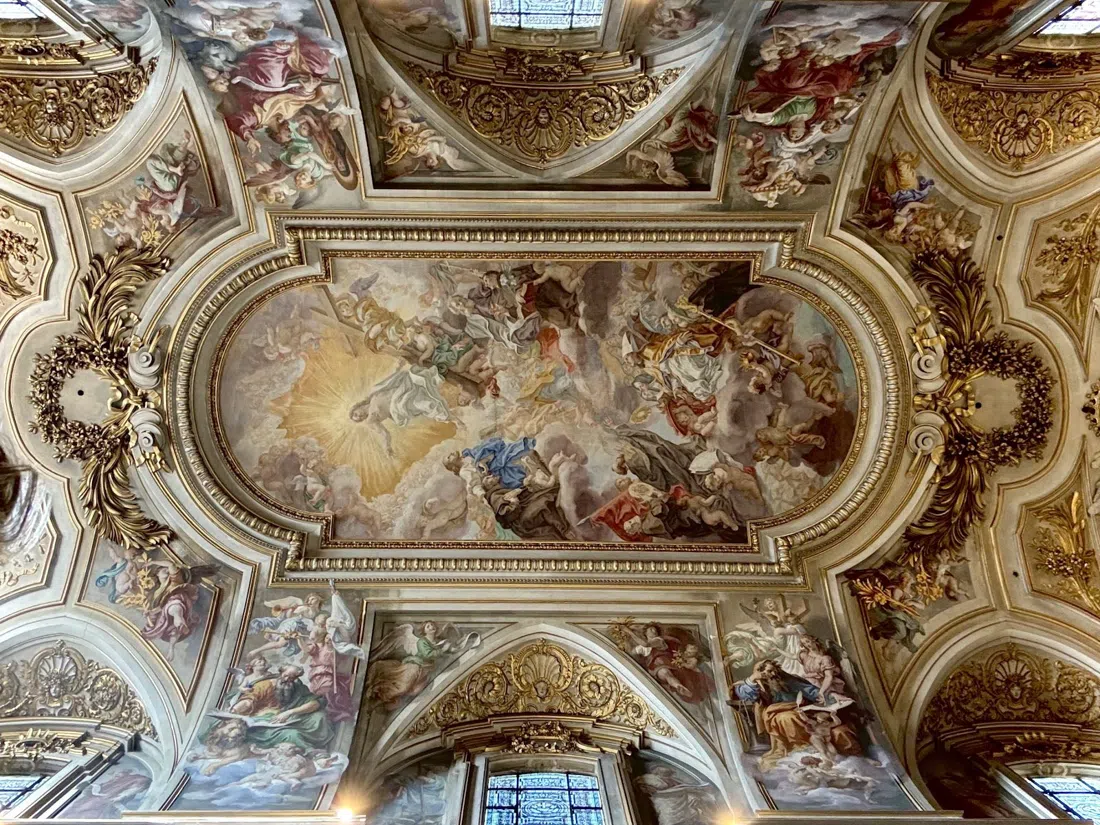
Palace ceilings you book before the flight
Four of the best interiors in Rome are behind doors that do not simply open, and two of them need planning weeks out.
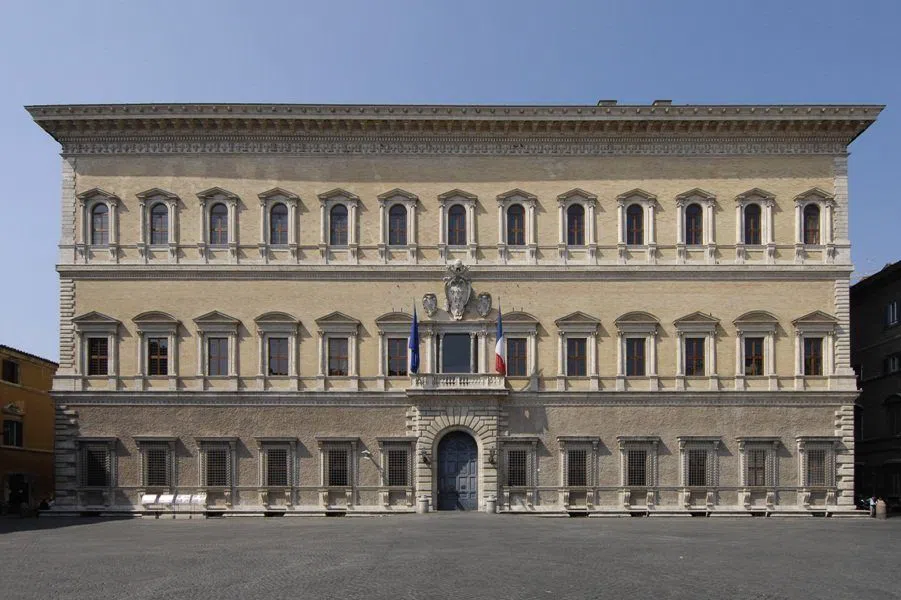
Palazzo Farnese (Ambasciata di Francia) (Regola, on Piazza Farnese) holds Annibale Carracci's Loves of the Gods, the ceiling every painter above studied first. Access is genuinely restricted: guided visits only, bookable up to five days ahead, groups capped at 25 to 33, ID required at the door, no photography and reinforced security. English tours run Tuesdays at 17:00. Tickets are €13 standard, €20 including the basements, €22 combined with the École française. Book before you book flights, not after. This is the one date on the list worth building the trip around.
Palazzo Pamphilj (Ambasciata del Brasile) (Parione, on Piazza Navona) offers free 40-minute tours of Cortona's Stories of Aeneas in the Borromini gallery, with the finest private window onto the piazza in Rome. Reservation through the embassy is compulsory, groups are small and fixed in size, ID is required, and the tour runs in Italian and Portuguese only. If neither language works for you, bring a translation or an accredited guide; do not turn up hoping for English.

Galleria Colonna (Palazzo Colonna) (rione Trevi, entrance on Via della Pilotta) opens two mornings a week and no more: Friday with a guide at €35, Saturday free-flow at €25, or €15 reduced. Private group bookings are accepted on request. Coli and Gherardi's Battle of Lepanto ceiling turns a family war record into a sky full of warships, and the restricted opening is exactly why the room stays uncrowded. Saturday suits couples who want to drift; Friday suits anyone who wants the iconography explained.
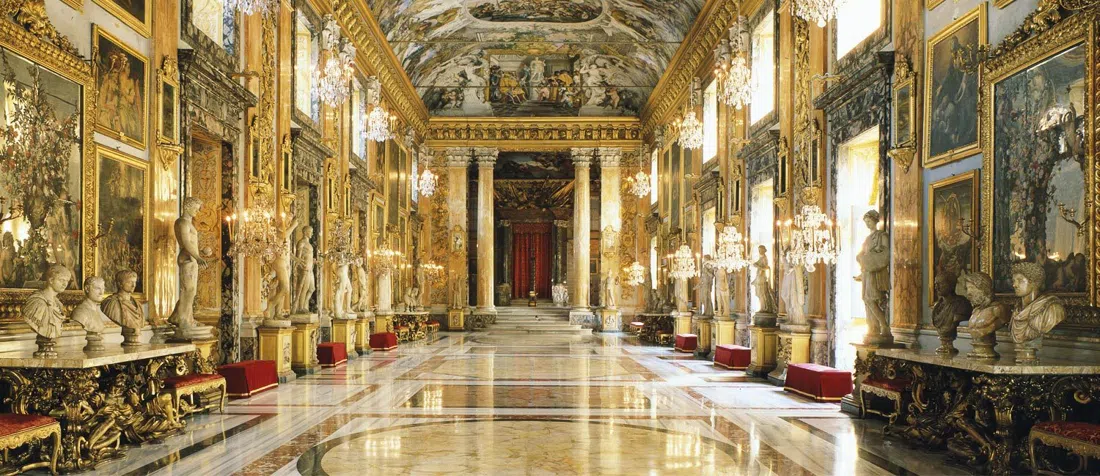
Galleria Doria Pamphilj (Pigna, on Via del Corso) is still lived in by the family, which is why the ceilings sit above furniture rather than museum rope. The Gallery of Mirrors is the best-preserved late-baroque-into-rococo interior in the centre. Entry is timed and booking is required: €16 on the door, €17 online, under 12 free, audioguide included. Groups are accommodated with prior reservation.
Ceilings that keep their own hours
Casino dell'Aurora Pallavicini (on the Quirinal, Via XXIV Maggio) unlocks its gate twelve mornings a year: the 1st of each month except January, 10:00 to 12:00 and 15:00 to 17:00. Inside is Guido Reni's Aurora, the classical counterweight to everything else here, measured and friezelike, with no vertigo in it. Entry is free, there is no booking, and there will be a queue. Small groups are fine. If your dates include a 1st, put it in the diary first and arrange the rest around it.
Chiesa dei Santi Biagio e Carlo ai Catinari (Regola, by Via Arenula) has Domenichino's Cardinal Virtues in the pendentives, the cool, sculptural, deliberate counter-argument to Lanfranco's spectacle, with Lanfranco's own last work in the apse above. Opening hours are erratic around Mass and worth verifying on the day. In practice this is a small-group or couples stop.
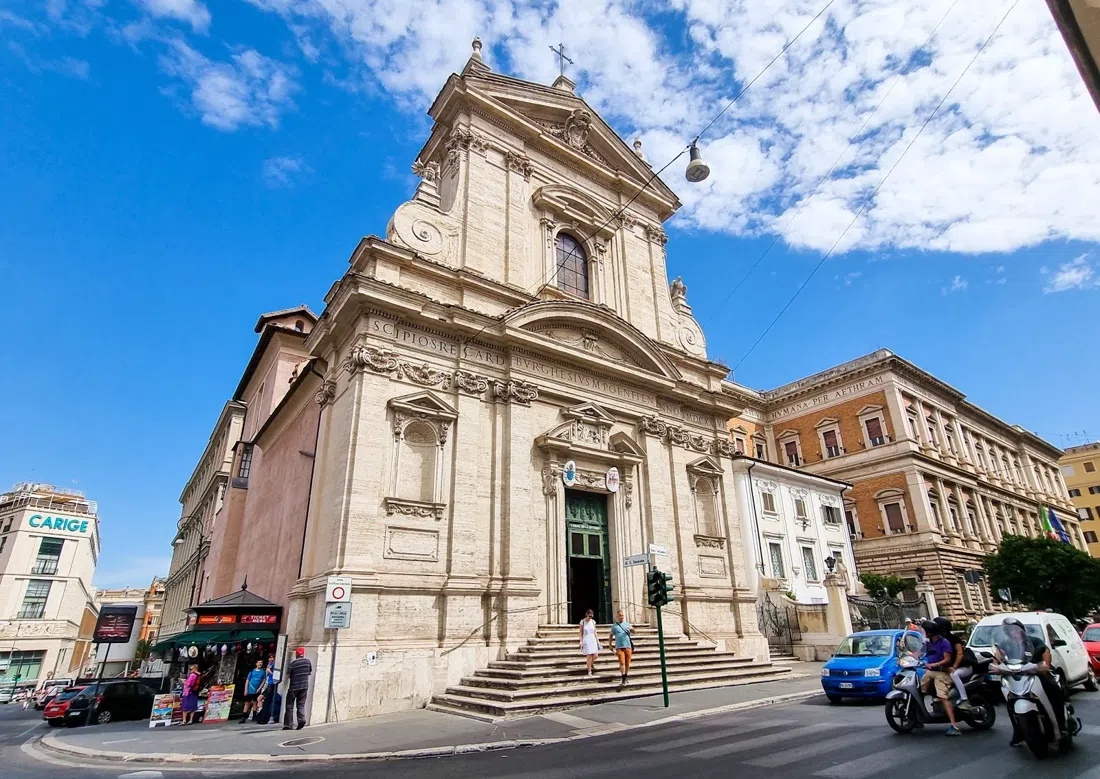
Santa Maria della Vittoria (Sallustiano, on Via XX Settembre) is where nearly everyone in the room is looking at Bernini's Ecstasy of St Teresa and nobody is looking up. Cerrini's Virgin Triumphing over Heresy fills the vault, and it is the least-noticed great ceiling in the city for precisely that reason. The church is very small, so split large parties, and note that visits pause during Mass. Free, no booking.
The convent that shows you the maths
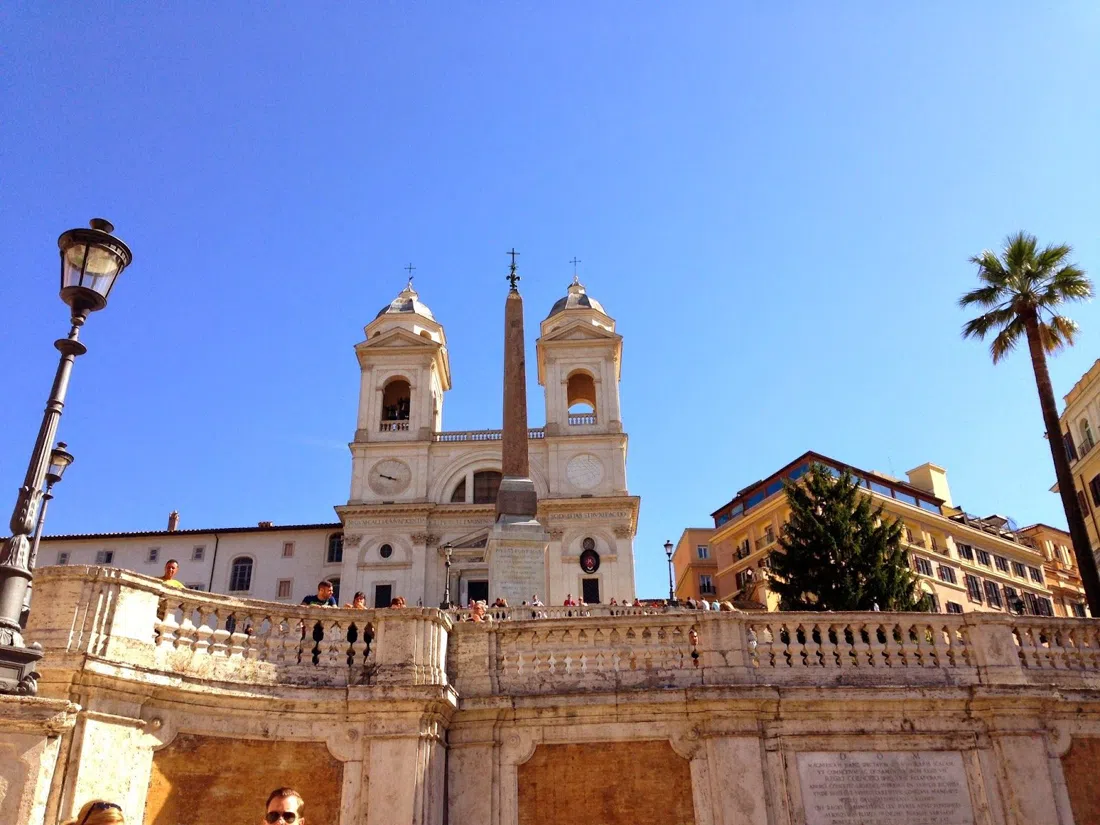
End at Convento della Trinità dei Monti (Campo Marzio, at the top of the Spanish Steps), where Maignan and Nicéron's anamorphoses stretch a saint along a corridor wall so that the image only resolves from one standing position, and Pozzo's Marriage at Cana fills the refectory. This stop explains how every illusion on the list is actually constructed: the geometry, the single viewing point, the deliberate distortion everywhere else. Tours are made for groups and standard rates assume 20 or more; smaller parties can request an exclusive visit. English runs Mondays at 10:00 and booking by email is compulsory. €15 full, €6 students and under 18, free under 8.
Practical notes for the walk
Almost all of this is walkable. Sant'Andrea della Valle, Chiesa Nuova, Palazzo Pamphilj, Palazzo Farnese and San Carlo ai Catinari sit within ten minutes of each other; the Gesù, Sant'Ignazio, Doria Pamphilj, Santi XII Apostoli and Galleria Colonna form a second tight cluster. Palazzo Barberini, Santa Maria della Vittoria and the Casino dell'Aurora are uphill to the northeast, where Metro line A to Barberini or Repubblica saves the climb. Trinità dei Monti is at the top of the Spanish Steps, so pair it with the Barberini end of the day rather than the Corso.
Carry cash. Church lighting boxes take coins, the €1 at Sant'Ignazio matters, and small donations at free churches are how these interiors stay lit and open. Time it around Mass and around lunch: several churches close in the early afternoon and reopen around 16:00, and the two-mornings-a-week and one-morning-a-month venues are unforgiving.
Budget honestly. Three of the four palace visits cost money, roughly €15 at Palazzo Barberini, €16 to €17 at Doria Pamphilj, €25 to €35 at Colonna, €13 to €22 at Farnese and €15 at Trinità dei Monti, so a full two-day version lands somewhere near €85 to €100 per person. Everything else on this list is free. Two unhurried days is the right shape: churches and one palace each day, with the fixed-date bookings anchoring the schedule.
Stay central if you can. Anywhere between Piazza Navona and the Quirinal puts every stop here inside a half-hour walk, and both clusters are reachable before the morning coach parties; compare rates with the Rome hotel search, and read the wider Rome guide for how these interiors fit alongside the rest of the city.