
Most visitors to Rome spend their whole trip looking up — at domes, at broken columns, at the Colosseum's arches cut against the sky. The more honest tour of this city runs downward. I've spent a good part of 2026 going back through the staircases and tunnels that most itineraries skip: a basilica with three churches stacked inside it, an emperor's pleasure palace sealed under a hillside park, a prison older than the Republic. None of what follows is guesswork or recycled brochure copy — every site below is one I've walked through again this year, and the opening hours, prices and door policies are what I found on the ground, not what a leaflet printed in 2019 still claims.
The One Building That Explains All of Rome
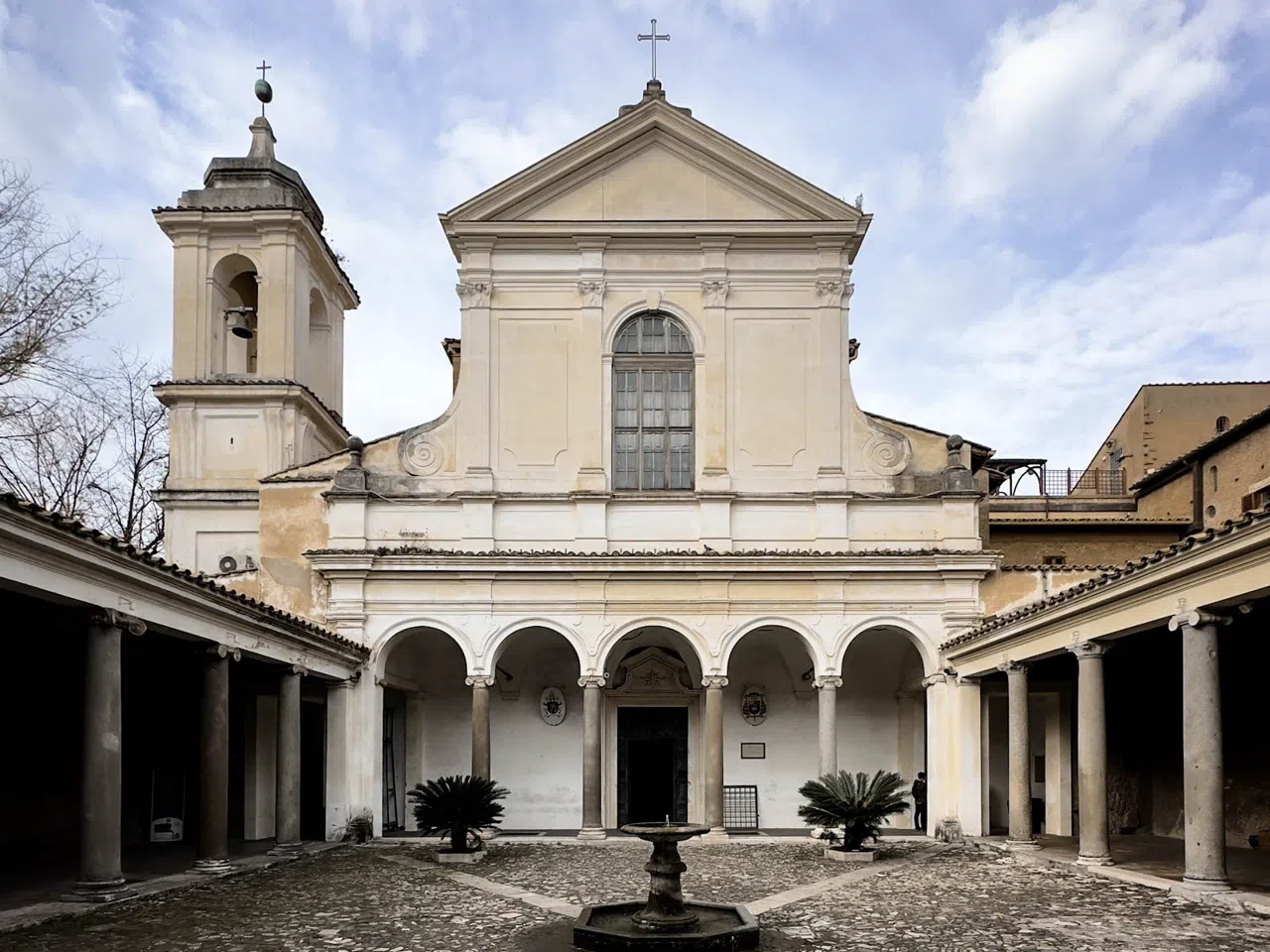
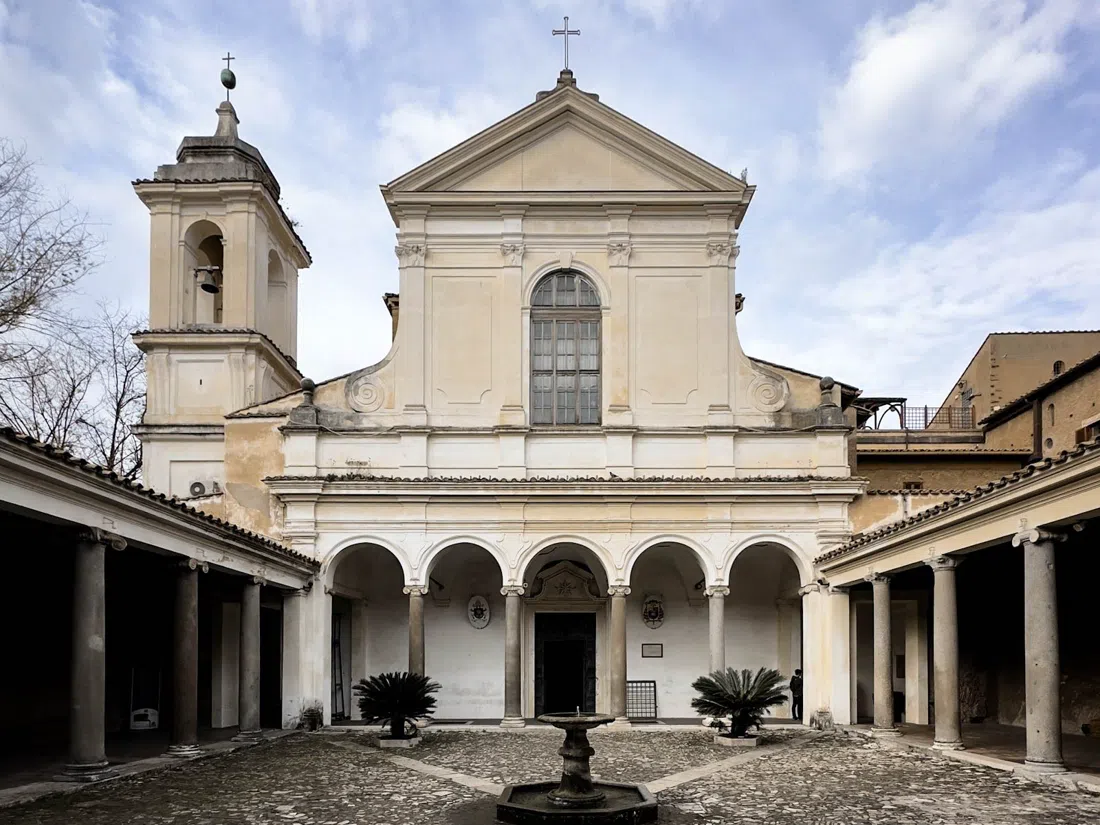
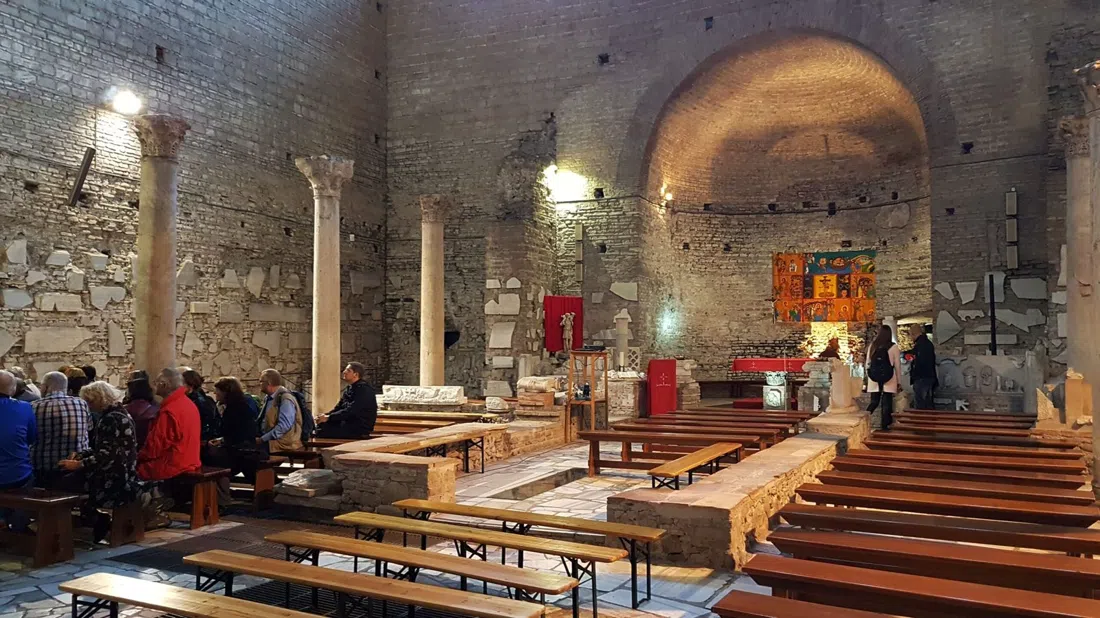
Start with Basilica di San Clemente, a few minutes' walk uphill from the Colosseum toward San Giovanni. On the surface it's a handsome twelfth-century church with a glittering apse mosaic — pleasant, but not remarkable by Roman standards. Then you pay for the excavation ticket, descend a narrow staircase behind the sacristy, and the floor drops away in time: a fourth-century basilica, its faded frescoes still on the walls, sits directly beneath the current church, and below that again is a second-century Mithraeum — a pagan temple to Mithras, complete with an altar and a channel that once carried running water for its rites. The Irish Dominicans who run San Clemente have kept this sequence remarkably legible; it's the clearest single-building timeline in Rome, medieval church over paleo-Christian basilica over Roman street over pagan temple, and I send first-time visitors here before anywhere else on this list precisely because it makes the rest of the city's underground make sense. Excavation-level entry is booked online with a timed slot — don't skip this step, because the staircases down are narrow and the site limits how many people move through at once. It's €10 for adults, €5 reduced, and small groups are welcome, but this is not a site that flows well for large coach parties; book early or mid-morning if you want the crypt levels to yourself for a few minutes.
Nero's Palace and the Colosseum's Hidden Floor
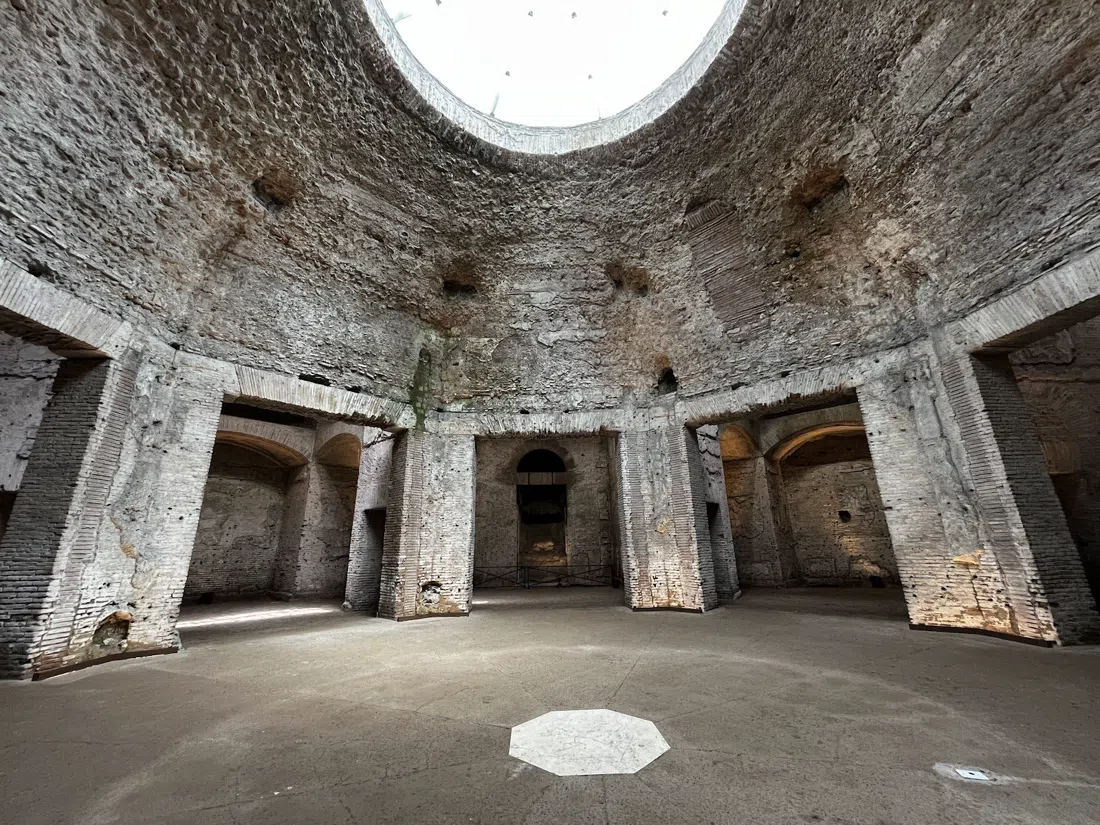
A short walk from San Clemente, on the Oppian Hill, is the most theatrical buried structure in the city: the Domus Aurea, Nero's Golden House, a palace so vast and so despised by his successors that they simply filled it with earth and built over it — the Baths of Trajan sit on top of it today. You go in wearing a hard hat, in a small guided cohort of roughly twenty-three people per slot, and walk through vaulted rooms with traces of the original frescoes still visible under two thousand years of soil. Some slots add a VR reconstruction that projects the frescoed, gilded rooms back onto the bare brick around you, which is either the best €20 you'll spend in Rome or a gimmick depending on your patience for headsets — basic guided entry runs €18–26, and the extended VR tours run €72–101. Either way, book weeks ahead if you're coming on a weekend; this sells out, and there's no walk-up option.
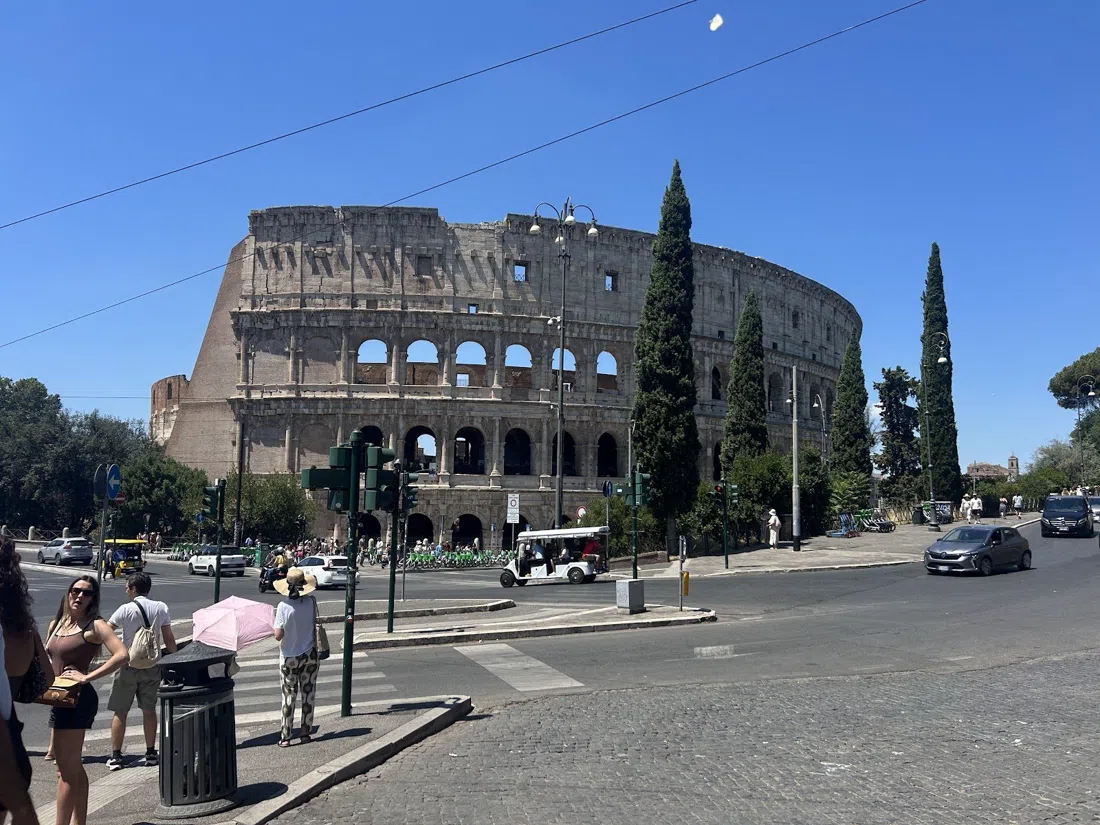
Down the hill and back toward the Colosseum itself, the Colosseum Underground (Hypogeum) is the most famous "hidden Rome" ticket of them all, and for good reason — this is the network of tunnels and lift shafts beneath the arena floor where gladiators, animals and stage machinery waited before being hoisted up into daylight. It's guided-only, run officially through the Parco Archeologico del Colosseo, and because everyone visiting Rome already has the Colosseum on their list, these underground add-ons are the first thing to sell out. The basic underground add-on is €24 on top of standard entry; full guided packages that bundle the arena floor and Palatine Hill run €63–90 and up. If there's one booking you make the moment your Rome dates are fixed, make it this one — group allocations are capped and I've seen travelers turn up in July hoping to add it on-site and simply be told no.
The Catacombs: Where Early Rome Buried Its Dead
The word "catacomb" itself comes from Rome, specifically from the Catacombs of San Sebastiano on the Via Appia Antica, where early Christians dug burial galleries into the soft volcanic tuff outside the city walls (Roman law forbade burial within them). The tour is guided only, thirty to forty-five minutes, multilingual and built for steady group flow — this is genuinely one of the better sites on this list for larger groups, though it's worth flagging that there are seventy irregular stone steps and no wheelchair access. At €15 adult, €12 reduced, it pairs naturally with the nearby Catacombs of San Callisto for a two-site underground itinerary along the Appian Way, best done in the cooler morning hours before the tour buses arrive in force.
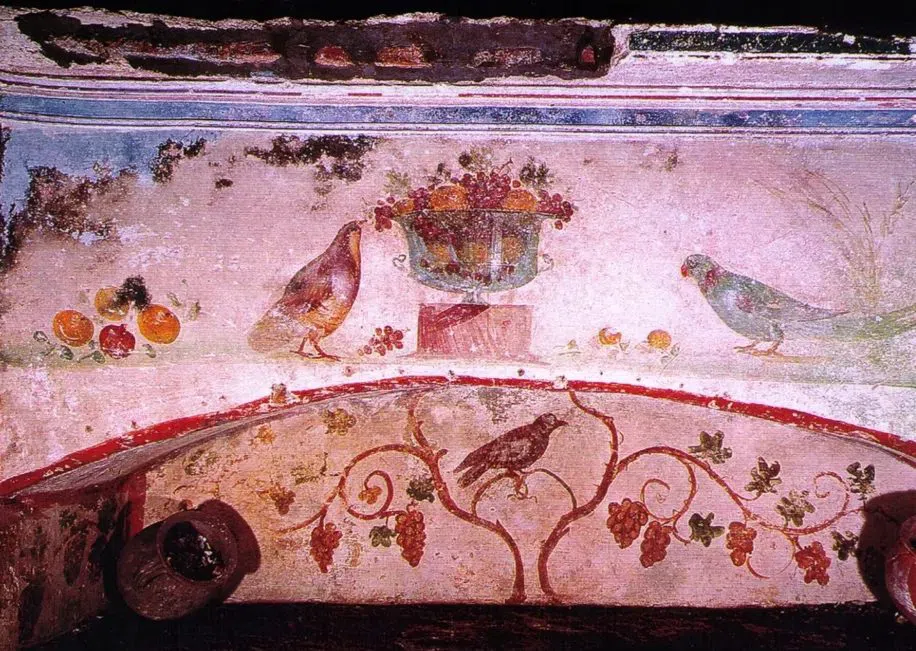
If you'd rather skip the queues that build up around the Appian Way trio, go instead to the Catacombs of Priscilla, off the Via Salaria north of the centre. It's quieter, and arguably has the richer fresco work of the three — including one of the earliest known images of the Madonna and Child, painted directly into the rock. Both individuals and groups need to go through a booking form rather than just turning up, entry is €10 adult (about €12 if you book online) and €7 for children, and it's worth noting the seasonal closures: mid-January and mid-August, when I'd otherwise expect this to be the pick of the three.
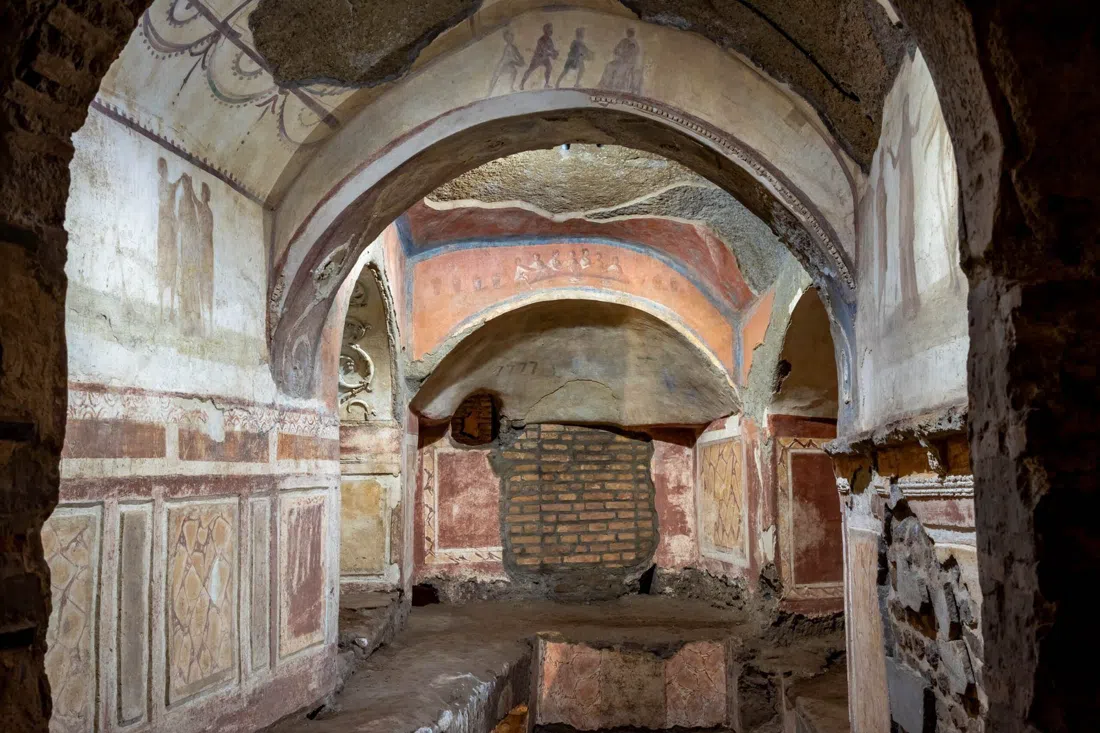
The third option, useful if you want variety rather than repetition, is the Catacombs of Domitilla on Via delle Sette Chiese — the largest and oldest catacomb network in the city, and the only one with an underground basilica actually built into the rock rather than simply carved as a gallery. It handles groups comfortably and costs €10–15 for adults, but it's closed on Tuesdays, which trips up more visitors than you'd expect when they're trying to slot it into a tight Rome itinerary.
Bones, a Dungeon and a Buried Neighbourhood — All in the City Centre
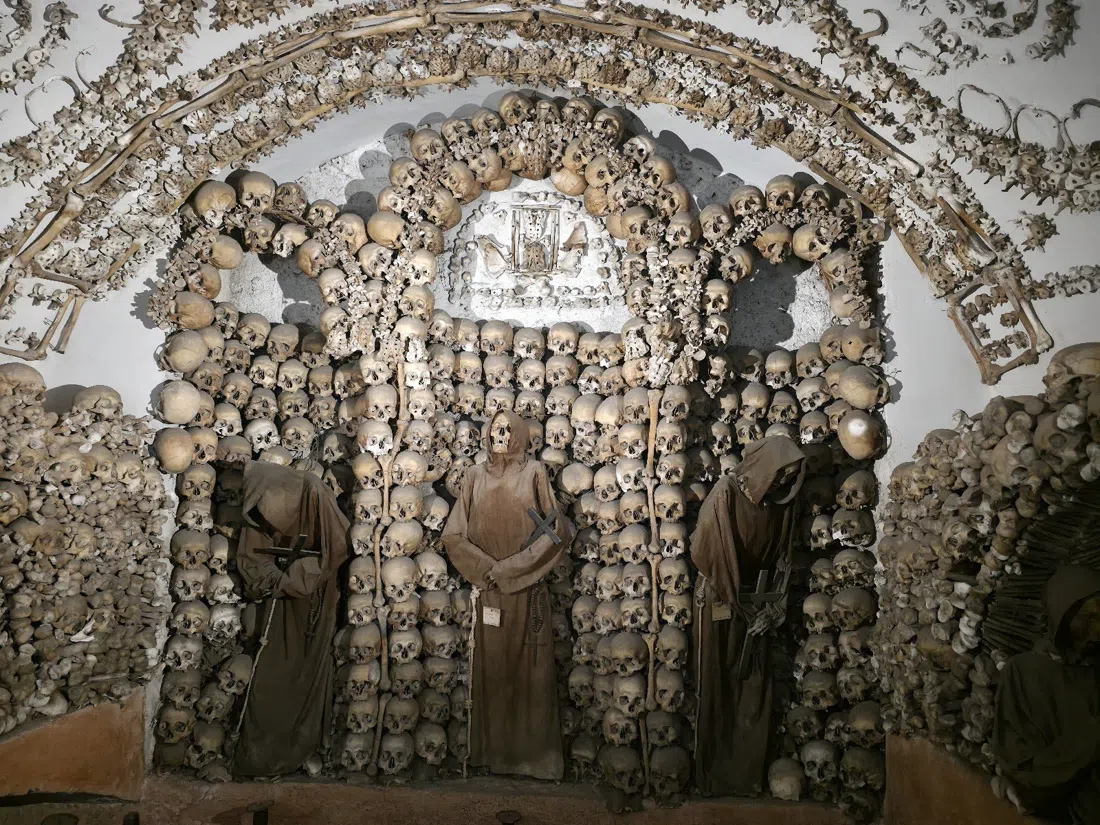
Not every underground site in Rome requires a trip out to the Appian Way. The Museum and Crypt of the Capuchin Friars, on Via Veneto near Piazza Barberini, is the macabre counterpoint to all that solemn early-Christian devotion: six small chapels where the bones of some 3,700 Capuchin friars have been arranged, deliberately, into decorative patterns on the walls and ceilings — chandeliers made of vertebrae, arches made of skulls. It's self-guided with timed skip-the-line entry, handles groups easily, and costs roughly €12–15. Interior photography is banned and enforced, so don't plan on it for content; go for the genuine, unsettling strangeness of the place instead, which no photograph really captures anyway.
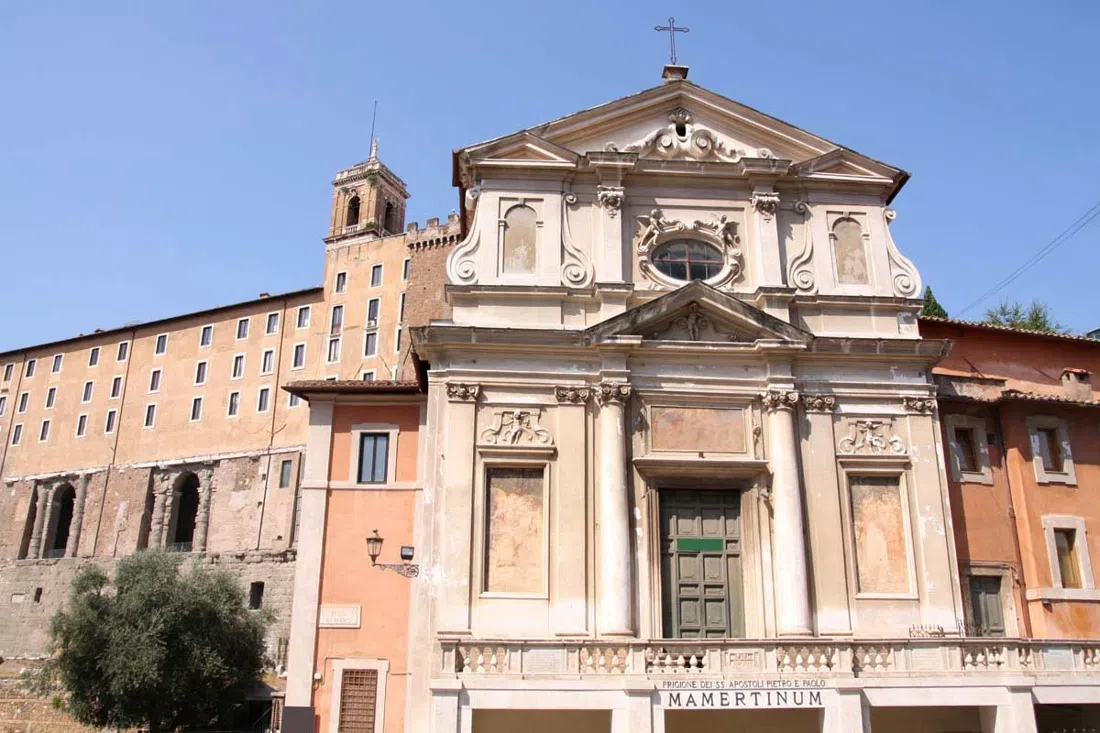
Down toward the Roman Forum, the Mamertine Prison (Carcer Tullianum) is Rome's oldest surviving structure of any kind, a seventh-century-BC dungeon carved into volcanic rock, traditionally identified as where St. Peter himself was imprisoned. It's self-guided with a video-guide handset, takes thirty to sixty minutes, handles groups without difficulty, and at €11 adult / €7 child is one of the cheapest serious historical sites in the city. Because it sits right beside the Forum, it's the easiest thing on this list to bolt onto an existing itinerary rather than plan a special trip for.
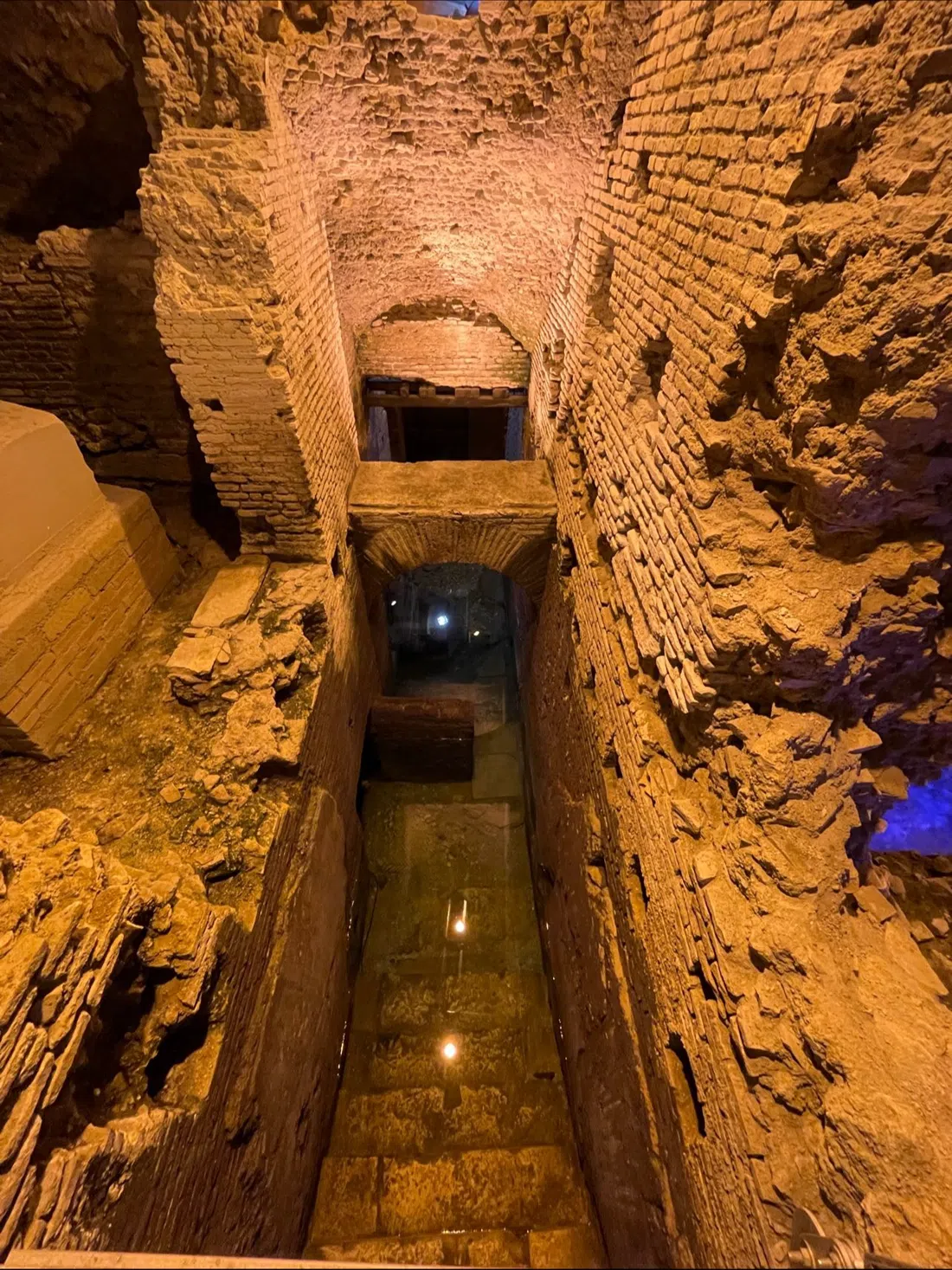
And then there's the site I'd actually put first if budget is the deciding factor: Vicus Caprarius – The City of Water, tucked just behind the Trevi Fountain. For €4 (plus €3.50 for the audio guide, worth adding), you descend into the remains of an entire Roman residential neighbourhood — streets, a nymphaeum, and the terminus of the Aqua Virgo aqueduct that still, via a different channel, feeds the Trevi Fountain above your head. Most of the crowd tossing coins into that fountain has no idea this sits directly beneath their feet. It's a small site, best for smaller groups or solo visitors rather than a coach party, and it's the single most surprising few euros you'll spend on this list.
The Quieter Underground: Frescoes and a Forgotten Cult
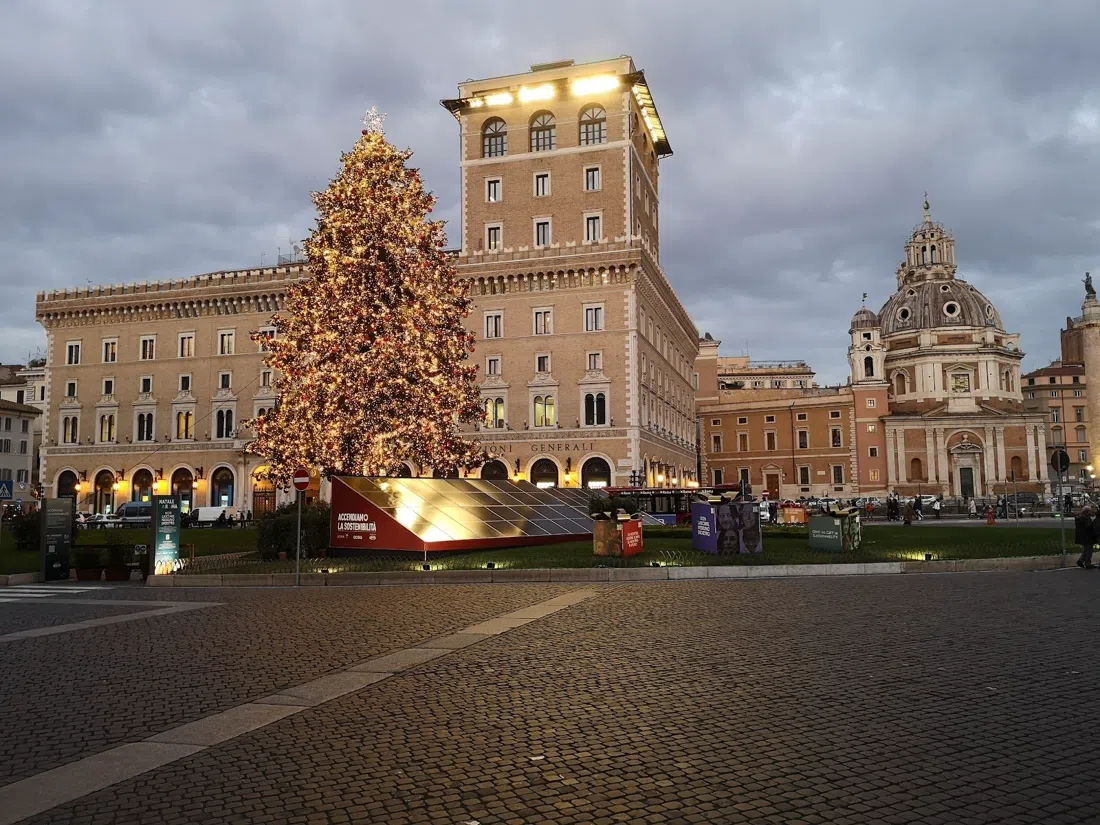
For something more theatrical than solemn, Domus Romane di Palazzo Valentini, right on Piazza Venezia, uses a genuinely well-built multimedia projection system to reconstruct excavated Roman houses in front of you — mosaic floors, marble columns and heated bath rooms rendered back into colour and light as your guide triggers each sequence. Groups are capped at twenty and paced by the guide, so there's no rushing through it, and it's €15 adult, €9 reduced. Just note it's closed Sundays and public holidays, which catches out more travelers than any other detail on this list.
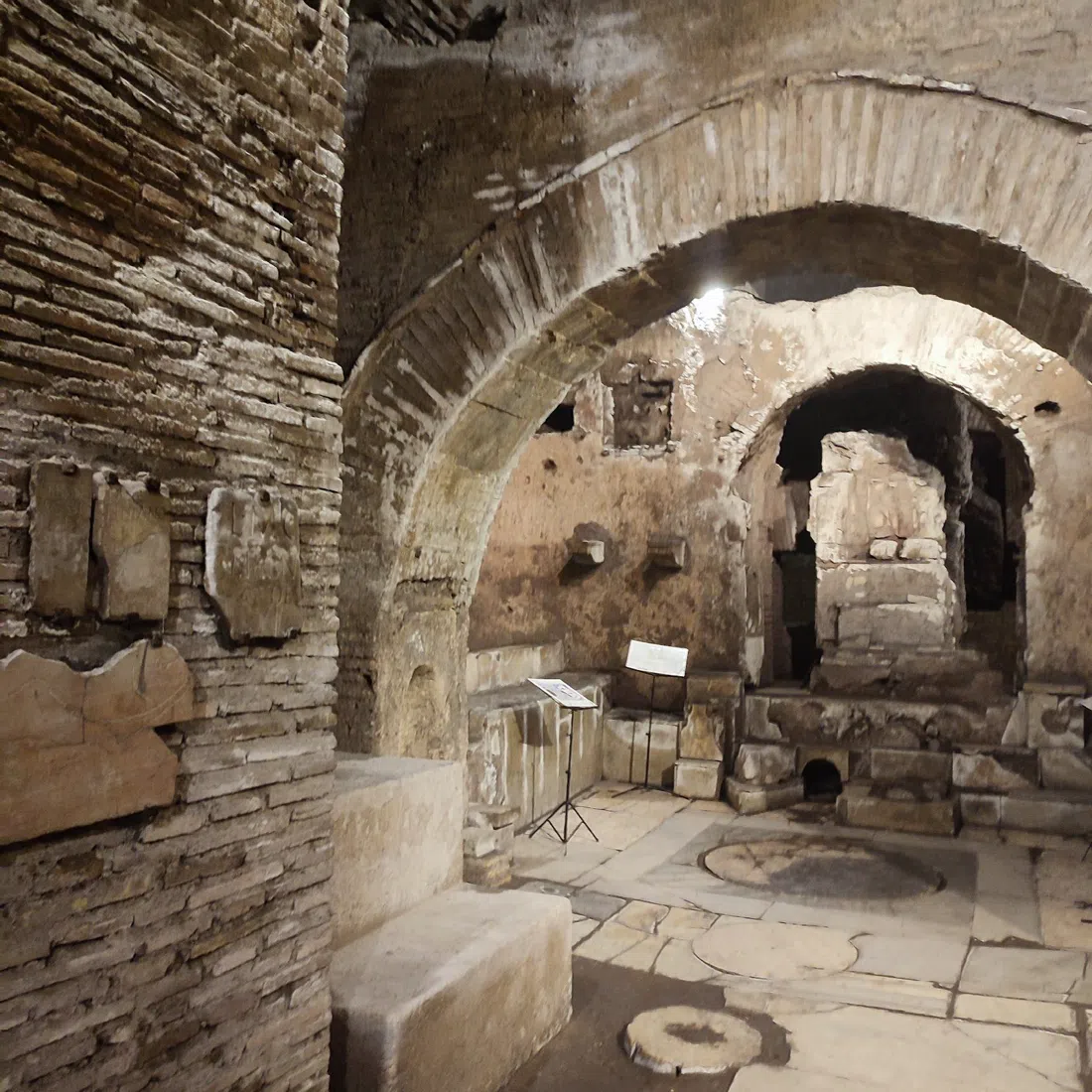
For readers who want a pagan counterweight to all the catacombs, the Mithraeum of the Circus Maximus is one of the more atmospheric sites in the city and one of the least visited — an underground temple to the cult of Mithras, reached only by advance reservation through the city's official booking line, with groups capped at around twenty-five. Pricing runs from free to a modest fee depending on the booking channel, but the reservation step is not optional, so don't build a same-day visit around it.
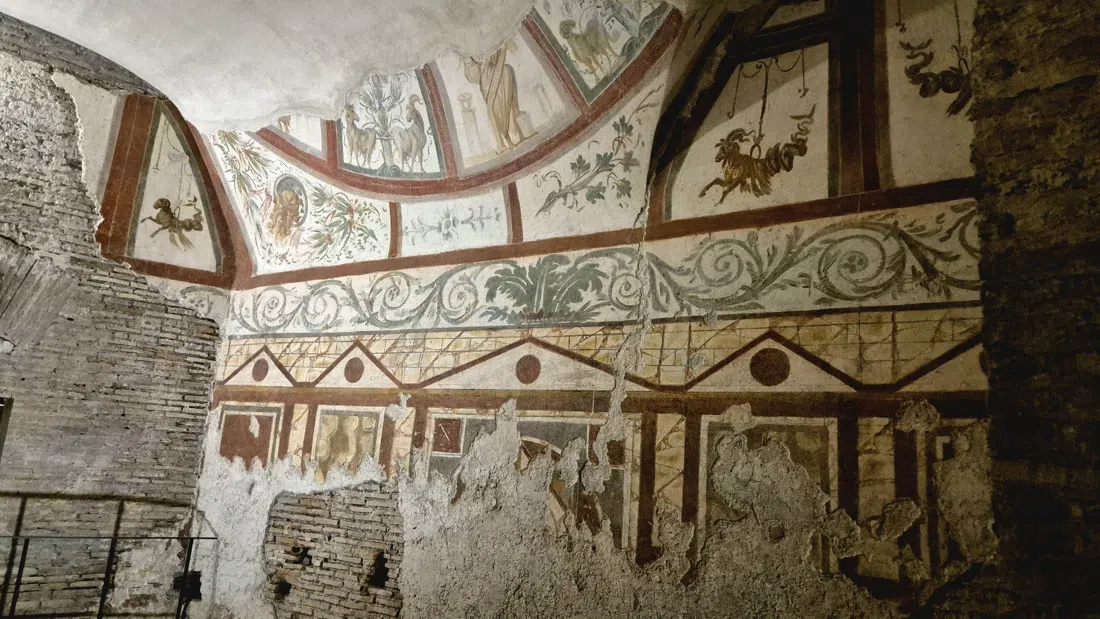
Finally, if you've already done the obvious buried-Rome circuit and want something genuinely under-visited, seek out Case Romane del Celio, on the Celian Hill near San Clemente — a set of Roman houses whose fresco preservation is, frankly, better than several sites that charge twice the price and draw ten times the crowd. Self-guided or guided options are both available, it handles groups comfortably, and at €8–10 adult / €6 reduced it's the best value-for-fresco-quality ratio on this entire list.
Getting Underground: The Practical Details
Transport: Most of these sites cluster around two areas — the Colosseum/Celio cluster (San Clemente, Domus Aurea, Colosseum Underground, Mamertine Prison, Case Romane del Celio, Palazzo Valentini) is walkable in a single day if you pace yourself, all served by the Colosseo metro stop on Line B. The catacombs sit outside this cluster on the Via Appia Antica or Via Salaria and need the 118 bus, a taxi, or the Archeobus tourist line — don't try to walk between them and the centre.
Booking: Nearly everything here is timed-entry or guided-only, and this is the single biggest thing to get right. Book the Colosseum Underground and Domus Aurea weeks ahead, especially for weekend visits — both cap group sizes hard and both sell out. San Clemente, the catacombs and Palazzo Valentini need less lead time but still benefit from booking a few days out in high season (May–September).
Cash and cards: Ticket offices increasingly take cards, but carry some cash in small denominations, particularly for Vicus Caprarius and the smaller sites, where card machines occasionally go down and there's no backup queue system.
Timing: Underground sites are naturally cool, which makes them a smart midday retreat in Rome's punishing summer heat — save the outdoor Forum and Palatine walking for early morning or the last two hours before sunset, and slot the buried sites into the 1pm–4pm window.
Budget: A realistic day covering three or four of these sites, with transport and a simple lunch, runs somewhere between €60 and €120 per person depending on how many guided/VR add-ons you choose. For where to base yourself for this kind of itinerary, see our Rome hotel search — the Celio and Monti neighbourhoods put you within walking distance of most of the Colosseum-cluster sites. For the rest of what the city has to offer above ground, our full Rome guide covers the rest of the itinerary.
None of this needs to be rushed into a single exhausting day. Rome's underground rewards the same patience as its churches and its ruins do above ground — pick two or three sites that genuinely interest you, book them properly, and let the gaps between them be slow. That's when the city actually starts to make sense, in layers, from the bottom up.